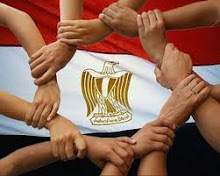
We often talk about the U.S. backtracking on democracy promotion in the Middle East and its abandoning of reformers in the region, however, it remains unclear to me as to what precisely Egyptians would like the U.S to do to help bring democracy to their country. Quite frankly, I don’t think Egyptians themselves have a clear answer to that question.
Ask any member of the opposition whether Islamist, liberal or leftist about U.S. role and they will immediately declare their rejection of any meddling by the U.S. in Egypt’s internal affairs, even refusing any pressure on the Egyptian regime from nationalist stand point. On the other hand, when the U.S. decide not to intervene in Egypt’s domestic affairs the same opposition cries out loud for its alleged backtracking on democracy and keeping blind eye the Egyptian government practices.
The truth of the matter is that Egyptians themselves are to be blamed for the crisis their country is facing right now mainly because of their political apathy and their worship of their rulers, something Egyptians are known for since the ancient days of the Pharos. Throughout history Egyptians have never revolted against their rulers and will never do no matter how corrupt and unjust they can get. It is the exactly the same overly forgiving , laid back, unconfrontational and apathetic nature of Egyptians that stands today a major obstacle in their way to attain freedom and democracy.
In a country that 60% of its people are illiterate and more than 45% earn less than $2 per day, it is almost impossible to mobilize them for the sake of democracy or human rights- they could care less. The average Egyptian is struggling to put bread on the table for his/her children and they can be beaten day and night by their heavy handed police forces and will not move a finger in protest. They’re prone to fear the government- typical feeling for those who are living in police state.
All the voices of reform you listed- journalists, moderate Islamists, judges, liberal opposition, bloggers, constitute small portion of the patriotic and educated elite and who are unable, so far, to mobilize the masses because simply politics is not the center of their attention- they are struggling to make living.
What does the U.S. have to do with this? And why should we get involved if the people themselves prefer the status quo!
When thousands of the people in Ukraine (population of 48 millions) took to the streets in 2004 protesting against their corrupt government forcing it to resign in what became known as the “Orange revolution” they did it by themselves and did not sit around waiting for the U.S. to rescue them.
I find it hard to believe that the 2 Billion dollars the U.S. give to Egypt in aid every year is the main reason responsible for keeping the Egyptian regime in power against the will of its own people. If Egyptians rise up against tyranny and corruption and demand change and democracy the U.S. will never object or intervene to save the regime or suppress the people.
Egyptians themselves are confused, divided and unwilling to change, so why bother!
Friday, September 12, 2008

Diplomacy discussions, week 1 & 2
Are International Relations (IR) a science or an art?
I believe that contemporary international relations (relations between nation-states) are indeed an art crafted based on evidence that is derived from science; therefore International relations ought to be considered both an art and science. The application of evidence-based scientific prescriptive formulas setting forth ways of how states should behave requires an art that puts into perspective the cultural, religious and societal differences among nation-states and civilizations when deciding which “color to paint to world politics with”, as phrased by Baylis et al pp.4
The world has endured major transformations throughout the twentieth century which witnessed two global industrialized wars, decolonization of European empires, and the end of the cold war. The traditional philosophical theories of world politics seemed inadequate to better explain and deal with the challenges and intellectual complexities of a new globalized world.
Thus, a new approach to international relations has emerged utilizing to a greater extent the comparative study of quantitative data and reinforced by the rise of analytical and quantitative research concepts, models and methods in order to look for pattern of behavior and for probabilities that certain behavior would occur (Russett & Starr, pp 17-18)
What is the value of studying International Relations from a theoritical perspective?
Studying International Relations (IR) from theoretical perspective enables us to understand how a complex world works and helps us determine which things matter and which don’t when dealing with the dynamic and ambiguous nature of the post-Cold-War international environment.
In their chapter “How do we think about world politics” Russett & Starr defines theory as an intellectual tool that provides us with a way to organize the complexity of the world and order facts into data (Kauffman et al, pp 19). Similarly, Smith defines theory as a kind of simplifying device that allows us to decide which facts matter and which do not (Balyis et al, pp.4)
Yet, many scholars doubt the ability of the four dominant theories in IR to meet challenges and the dynamics that underline global politics. Therefore, a fifth debate has emerged intersecting traditional theories with the Complexity Theory (CT) which found its way into social science soon after its development in the natural science (Emilian Kavalski: Emergence of complex international relations theory. Cambridge Review, Sept. 2007, pp 437). Retrieved [September 8, 2008], [EBSCO host, Norwich]
Being theoretical means to be able to describe our world and explain policy decisions we make, as well as having the ability to predict events and prescribe solutions for the world’s challenges in a systematic fashion, as Kauffman et al explain in their analysis of the four primary tools of IR to measure against events (Kauffman et al, pp.1-2)
Do you agree with Rosenau that “to think theoretically one must be constantly ready to be proven wrong.”
Yes, I do agree with Rosenau that when thinking theoretically one must be constantly ready to be proven wrong. Since theory is a science—all relevant data pertaining to the theory in question including hypotheses, research methods and analysis must be laid out and scrutinized in order to determine the validity of its conclusions. Critiquing a theory and testing its hypothesis in systematic approach will uncover any possible flaws that might prove it to be wrong; such process highlights the hallmark of science.
Russet & Starr also explain that unlike clinical or laboratory experiments, in social science we simply cannot conduct a real-life experiment, therefore we depend on “thinking experiment” based on rigorous empirical data on the case we are discussing (Kauffman et al, pp.23). One major challenge is the complexity of human behavior and individual relations within a society, with many different factors influencing the probabilities of an event, and our knowledge of these complex phenomena is still so imperfect (Kauffman et al, pp. 21)
This complexity could be paramount when policy makers have to make decisions dealing with unfamiliar cultures where values, traditions, religion and history have to be taken into perspective. A vivid example is when the U.S invaded Iraq in 2003 and hypnotized that Iraqis would welcome U.S soldiers who came to topple Saddam Hussein and his authoritarian regime. The next thing we know is an insurgency that dramatically changed the war tactics and expectations. War strategists failed to carefully examine and recognize the complexity of Iraqi society where religious teachings and tribal values prohibiting aiding foreign occupation transcend political disagreements.
How is the state power measured?
According to David Armstrong, in modern international society, state power lies in its ability to establish centralized and efficient military power, in addition to other elements which include professional diplomatic service and an ability to manipulate the balance of power (Balyis, et al (Ed.), 5th ed., pp.44)
Although Armstrong emphasizes the state political power, I believe that in today’s world where globalization is the main international actor, a state power is more inclusive and can be mainly measured by the strength of its national economy and its ability to maintain its sovereignty and identity while competing in an open and free market. State power also can be measured by the abundance of its natural resources, the coherence of its social structure, and the level of freedom and equality its citizens enjoy.
Stopford and Strange in 1991 echoed similar meaning when they concluded that states were manifestly less interested in the acquisition of territory than in the pursuit of wealth for the national economy: "national choices of industrial policy and efficiency in economic management are beginning to override choices of foreign or defense policy as the primary influences on how resources are allocated" (Geoffrey R.D. Underhill (2000, March). Gobal economy and the decline of state power. Working paper. pp.4) Retrieved [September, 3, 2008) from [Ciao]
Measuring the power of the state by its ability to serve its best interests and resorting to the carrot and stick policies in dealing with other nation-states can be viewed as selfish, and imply a form of state supremacy which can be best described as a realist view of world politics (more accurately for realists international politics), which will eventually lead to struggle for power between states each trying to maximize their national interests, according to Balyis et al, pp. 5
Balyis also argue within this realist scheme, states must ultimately rely on its own military resources to achieve their ends and the potential for conflict is ever present.
Moreover, the definition of what exactly represent a national interest can vary from one political party to the other, and therefore the measure of the state power can be subjective based on which party is in power.
Most of the problems that we are encountering in the world today are caused by the desire and active pursuit of states to influence others. And if we expand this statement by including non-state actors like organizations and groups, we will actually get to the cause of the core problems the world is facing today ranging from wars to terrorism and their repercussions on global economy.
States should not attempt to influence others whether utilizing their soft or hard power, rather focus on achieving prosperity to its citizens and make a good example for other states to follow if they themselves deem suitable based on their cultural and religious values.
Huntington’s assumption in 1996 that Western and non-Western values are simply incompatible is true to a large extent especially when it comes to social values and religious beliefs, much as Christianity and Islam interacted in the Middle Ages. Huntington’s warning of an imminent clash civilization could be understood based on the desire by one culture to influence the other.
Hurrell argues the need to develop globally institutionalized political process in which norms and rules can be negotiated on the basis of dialogue and consent, rather than simply imposed by the most powerful (Balyis et al, pp. 50-51)
Is globalization an actor, which implies that it can accomplish things? Or is it a condition that has an effect?
Globalization is a much disputed term in itself, however analysts at least agree that it describes a one-world system where all actors have to play by the same economic rules. (Balyes et al pp. 75). Prahalad in 2007 described globalization like gravity: there is no point denying its existence. So, although we still cannot agree on what exactly that can best define globalization, but we have seen its impact on humankind and its accomplishments in the twentieth century.
Isn't the abundance of natural resources one of the strengths of a state, more like capital that can be put to good use during financial hardships than a true measure of power? For the coherence of social structure and level of freedom and equality of its citizens, I think those are actually things that are measures of a country's development, rather than the power they can bring to bear on a given situation. Although resources, development, freedom and equality are important, how does a state accomplish its international goals?
I agree that the abundance of natural resources is one of the strengths of a state, and I also agree with her that the coherence of its social structure and the level of freedom and equality of its citizens could be a measure of a country’s development. However, I consider that a nation’s economic strength and its social and political development are indeed some of the aspects of its power, and they’re things that we should be able to use to measure a state power.
I believe that a powerful state is the one that has strong economy, stable political environment, a free society, strong social structure and a powerful military power that can deter the enemies of the state from threatening its prosperity. This argument actually raises a fundamental question of how do we actually define state power?
What is globalization? How does it combine elements of politics, economics, culture, society, and more besides? What does it mean to speak of the "globalization of world politics"?
Globalization simply means a “shrinking world”. The massive advances in global communications, transport and informatics technologies over the past several decades have created worldwide interconnectedness causing transnational spread of ideas, cultures and information in an accelerating pace. The result is a world that became a single social space with global tendency evident in all sectors including economic, military, legal, ecological, cultural and social aspects (Balyis et al, pp. 16-21)
However, globalization is also complex process; it is asymmetrical (not uniformly experienced across all regions), and multidimensional (patterns of economic and cultural globalizations are not identical) (Balyis et al, pp22)
Globalization represents a conceptual shift in the way we think about global politics. It transformed politics from the state-centric geopolitics and the struggle for power to an era where states are becoming embedded in an overlapping web of a Global Governing Complex within which interests are articulated, decisions are made and policies are conducted through transnational political process (Balyis et al, pp24-25)
Within this global governance complex civil society or private and non-governmental agencies have become increasingly influential in the formulation and implementation of global public policy, and in some cases exercising political power across national boundaries and undermining the state authority (Balyis et al, pp.26-27). Thus, contemporary globalization although did not abolish but has shaken and transformed the very basic covenants of the Westphalian constitution (territoriality, state sovereignty and autonomy) which established the legal basis of modern statehood (Balyis et al, pp. 23-24)
I believe that contemporary international relations (relations between nation-states) are indeed an art crafted based on evidence that is derived from science; therefore International relations ought to be considered both an art and science. The application of evidence-based scientific prescriptive formulas setting forth ways of how states should behave requires an art that puts into perspective the cultural, religious and societal differences among nation-states and civilizations when deciding which “color to paint to world politics with”, as phrased by Baylis et al pp.4
The world has endured major transformations throughout the twentieth century which witnessed two global industrialized wars, decolonization of European empires, and the end of the cold war. The traditional philosophical theories of world politics seemed inadequate to better explain and deal with the challenges and intellectual complexities of a new globalized world.
Thus, a new approach to international relations has emerged utilizing to a greater extent the comparative study of quantitative data and reinforced by the rise of analytical and quantitative research concepts, models and methods in order to look for pattern of behavior and for probabilities that certain behavior would occur (Russett & Starr, pp 17-18)
What is the value of studying International Relations from a theoritical perspective?
Studying International Relations (IR) from theoretical perspective enables us to understand how a complex world works and helps us determine which things matter and which don’t when dealing with the dynamic and ambiguous nature of the post-Cold-War international environment.
In their chapter “How do we think about world politics” Russett & Starr defines theory as an intellectual tool that provides us with a way to organize the complexity of the world and order facts into data (Kauffman et al, pp 19). Similarly, Smith defines theory as a kind of simplifying device that allows us to decide which facts matter and which do not (Balyis et al, pp.4)
Yet, many scholars doubt the ability of the four dominant theories in IR to meet challenges and the dynamics that underline global politics. Therefore, a fifth debate has emerged intersecting traditional theories with the Complexity Theory (CT) which found its way into social science soon after its development in the natural science (Emilian Kavalski: Emergence of complex international relations theory. Cambridge Review, Sept. 2007, pp 437). Retrieved [September 8, 2008], [EBSCO host, Norwich]
Being theoretical means to be able to describe our world and explain policy decisions we make, as well as having the ability to predict events and prescribe solutions for the world’s challenges in a systematic fashion, as Kauffman et al explain in their analysis of the four primary tools of IR to measure against events (Kauffman et al, pp.1-2)
Do you agree with Rosenau that “to think theoretically one must be constantly ready to be proven wrong.”
Yes, I do agree with Rosenau that when thinking theoretically one must be constantly ready to be proven wrong. Since theory is a science—all relevant data pertaining to the theory in question including hypotheses, research methods and analysis must be laid out and scrutinized in order to determine the validity of its conclusions. Critiquing a theory and testing its hypothesis in systematic approach will uncover any possible flaws that might prove it to be wrong; such process highlights the hallmark of science.
Russet & Starr also explain that unlike clinical or laboratory experiments, in social science we simply cannot conduct a real-life experiment, therefore we depend on “thinking experiment” based on rigorous empirical data on the case we are discussing (Kauffman et al, pp.23). One major challenge is the complexity of human behavior and individual relations within a society, with many different factors influencing the probabilities of an event, and our knowledge of these complex phenomena is still so imperfect (Kauffman et al, pp. 21)
This complexity could be paramount when policy makers have to make decisions dealing with unfamiliar cultures where values, traditions, religion and history have to be taken into perspective. A vivid example is when the U.S invaded Iraq in 2003 and hypnotized that Iraqis would welcome U.S soldiers who came to topple Saddam Hussein and his authoritarian regime. The next thing we know is an insurgency that dramatically changed the war tactics and expectations. War strategists failed to carefully examine and recognize the complexity of Iraqi society where religious teachings and tribal values prohibiting aiding foreign occupation transcend political disagreements.
How is the state power measured?
According to David Armstrong, in modern international society, state power lies in its ability to establish centralized and efficient military power, in addition to other elements which include professional diplomatic service and an ability to manipulate the balance of power (Balyis, et al (Ed.), 5th ed., pp.44)
Although Armstrong emphasizes the state political power, I believe that in today’s world where globalization is the main international actor, a state power is more inclusive and can be mainly measured by the strength of its national economy and its ability to maintain its sovereignty and identity while competing in an open and free market. State power also can be measured by the abundance of its natural resources, the coherence of its social structure, and the level of freedom and equality its citizens enjoy.
Stopford and Strange in 1991 echoed similar meaning when they concluded that states were manifestly less interested in the acquisition of territory than in the pursuit of wealth for the national economy: "national choices of industrial policy and efficiency in economic management are beginning to override choices of foreign or defense policy as the primary influences on how resources are allocated" (Geoffrey R.D. Underhill (2000, March). Gobal economy and the decline of state power. Working paper. pp.4) Retrieved [September, 3, 2008) from [Ciao]
Measuring the power of the state by its ability to serve its best interests and resorting to the carrot and stick policies in dealing with other nation-states can be viewed as selfish, and imply a form of state supremacy which can be best described as a realist view of world politics (more accurately for realists international politics), which will eventually lead to struggle for power between states each trying to maximize their national interests, according to Balyis et al, pp. 5
Balyis also argue within this realist scheme, states must ultimately rely on its own military resources to achieve their ends and the potential for conflict is ever present.
Moreover, the definition of what exactly represent a national interest can vary from one political party to the other, and therefore the measure of the state power can be subjective based on which party is in power.
Most of the problems that we are encountering in the world today are caused by the desire and active pursuit of states to influence others. And if we expand this statement by including non-state actors like organizations and groups, we will actually get to the cause of the core problems the world is facing today ranging from wars to terrorism and their repercussions on global economy.
States should not attempt to influence others whether utilizing their soft or hard power, rather focus on achieving prosperity to its citizens and make a good example for other states to follow if they themselves deem suitable based on their cultural and religious values.
Huntington’s assumption in 1996 that Western and non-Western values are simply incompatible is true to a large extent especially when it comes to social values and religious beliefs, much as Christianity and Islam interacted in the Middle Ages. Huntington’s warning of an imminent clash civilization could be understood based on the desire by one culture to influence the other.
Hurrell argues the need to develop globally institutionalized political process in which norms and rules can be negotiated on the basis of dialogue and consent, rather than simply imposed by the most powerful (Balyis et al, pp. 50-51)
Is globalization an actor, which implies that it can accomplish things? Or is it a condition that has an effect?
Globalization is a much disputed term in itself, however analysts at least agree that it describes a one-world system where all actors have to play by the same economic rules. (Balyes et al pp. 75). Prahalad in 2007 described globalization like gravity: there is no point denying its existence. So, although we still cannot agree on what exactly that can best define globalization, but we have seen its impact on humankind and its accomplishments in the twentieth century.
Isn't the abundance of natural resources one of the strengths of a state, more like capital that can be put to good use during financial hardships than a true measure of power? For the coherence of social structure and level of freedom and equality of its citizens, I think those are actually things that are measures of a country's development, rather than the power they can bring to bear on a given situation. Although resources, development, freedom and equality are important, how does a state accomplish its international goals?
I agree that the abundance of natural resources is one of the strengths of a state, and I also agree with her that the coherence of its social structure and the level of freedom and equality of its citizens could be a measure of a country’s development. However, I consider that a nation’s economic strength and its social and political development are indeed some of the aspects of its power, and they’re things that we should be able to use to measure a state power.
I believe that a powerful state is the one that has strong economy, stable political environment, a free society, strong social structure and a powerful military power that can deter the enemies of the state from threatening its prosperity. This argument actually raises a fundamental question of how do we actually define state power?
What is globalization? How does it combine elements of politics, economics, culture, society, and more besides? What does it mean to speak of the "globalization of world politics"?
Globalization simply means a “shrinking world”. The massive advances in global communications, transport and informatics technologies over the past several decades have created worldwide interconnectedness causing transnational spread of ideas, cultures and information in an accelerating pace. The result is a world that became a single social space with global tendency evident in all sectors including economic, military, legal, ecological, cultural and social aspects (Balyis et al, pp. 16-21)
However, globalization is also complex process; it is asymmetrical (not uniformly experienced across all regions), and multidimensional (patterns of economic and cultural globalizations are not identical) (Balyis et al, pp22)
Globalization represents a conceptual shift in the way we think about global politics. It transformed politics from the state-centric geopolitics and the struggle for power to an era where states are becoming embedded in an overlapping web of a Global Governing Complex within which interests are articulated, decisions are made and policies are conducted through transnational political process (Balyis et al, pp24-25)
Within this global governance complex civil society or private and non-governmental agencies have become increasingly influential in the formulation and implementation of global public policy, and in some cases exercising political power across national boundaries and undermining the state authority (Balyis et al, pp.26-27). Thus, contemporary globalization although did not abolish but has shaken and transformed the very basic covenants of the Westphalian constitution (territoriality, state sovereignty and autonomy) which established the legal basis of modern statehood (Balyis et al, pp. 23-24)
Thursday, September 11, 2008
American Muslims–Shed the Cynicism and Get Engaged
By Parvez Ahmed
Muslim Media Network
I was there. One of the 84,000 at Invesco Field witnessing history. The day and the moment were as inspiring as it was profound. As the chants of “yes we can” reverberated through the stadium, they re-ignited feelings of optimism about America’s future, which in the last eight years had been jaded by the politics of fear and divisiveness. Perhaps no group has been more vilified and continues to bear the brunt of this politics of fear than Muslims and Arabs.
Seated next to me at Invesco was Mazen Asbahi, the Chicago attorney who was appointed as national coordinator for American Muslim and Arab outreach by the Obama campaign. Mazen lasted only a few weeks. His resignation came in the wake of discredited websites spuriously alleging his links to an imam (Muslim spiritual leader) and that imam’s links to the Muslim Brotherhood, a socio-political, albeit often controversial, movement that originated in Egypt.
Mazen resigned not because he did anything wrong but simply because he put his country first. He understood the importance of this election and did not want smears to distract the American public from failing to heed Obama’s message of change. He firmly believes that Obama will restore America’s respect abroad while addressing many of the pressing issues of our time from the economy to global warming.
In Mazen’s story is a lesson for all Americans. The first lesson is for those who fail to stand up to the merchants of fear. The American public and the mainstream media need to realize that there is a well coordinated effort to discredit promising American Muslims and thus marginalize the American Muslim community. These thugs of bigotry feed on ignorance and fear of the unknown. Not standing up to these bigots is not only un-American, but also leads to bad policy.
Although the Obama campaign never asked Mazen to resign, the perception remains that the campaign did not stand-up and challenge the underlying bigotry that led to his unfortunate departure. Obama was correct in denying that he was a Muslim, but in addition he should have added a Seinfeld moment by simply asserting, “Not that there’s anything wrong with it (being a Muslim).”
The second lesson is for American Muslims. Community organizers are reporting a lack of enthusiasm in the Muslim community’s support for Obama. Standing at the crossroads where history is being shaped, the American Muslim community must not backslide into the familiar comforts of cynicism. Despite the hurt that the Muslim community feels and the scorns they bear they need to look beyond their immediate discomfort to what serves America and the world best. Instead of the all too familiar horse-trading that special interest group’s engage-in, the American Muslim community needs to transcend their disappointments and look to the future and take into account the seriousness of the issues at stake in this election: the rule of law, war and peace, economic justice, education and health care. They must understand that an Obama presidency will not be perfect (no presidency ever is), but a John McCain presidency will only be worse. McCain’s selection of Sarah Palin reinforces the perception that McCain lacks both judgment and temperament. We had enough with one decider who makes decisions from the gut. We can ill-afford another.
Beyond the emotions, objectively is there any doubt that from economic policy to environmental stewardship, Obama offers superior solutions? Is it not plainly obvious that Obama prefers diplomacy over war? In Denver he clearly stated that the decision to commit our nation to war can only be made in the face of a clear and present danger and not in the pursuit of some ideological utopia. Is it not refreshing to hear Obama’s view that hearts and minds in the Muslim world can be won over by sustained American engagement in improving the lives of those affected by years of war and neglect? Yes not all is palatable in Obama’s position, especially his appeasement of the pro-Israeli lobby. But if Muslims define an Obama presidency by the one issue of Israel then they are as guilty of being parochial as AIPAC and ADL (major pro-Israeli organizations), which often ignore all other realities in their blind and obsessive defense of Israel.
Undoubtedly American Muslim participation this election cycle is at record highs. However, given the closeness of the race and the enormity of its consequences, the community will have to provide all hands on deck to make sure that the right candidate gets elected.
Muslims cannot repeat the mistakes of the past when major American Muslim organizations hastily endorsed George Bush over the objections of African American Muslims, the largest sub-group in the community. Nor can they tread the path of 2004 when they gave a “qualified endorsement” to John Kerry, which understandably dampened Muslim enthusiasm at the polls.
Back to Mazen. He has every reason to sulk because he was unfairly “swift-boated.” Yet he remains optimistic and enthusiastically chugs along (although not officially part of the campaign). Throughout the evening in Denver while remaining fully cognizant of the historicity of the moment, Mazen did not waste any time and kept furiously working his Blackberry making phone calls and texting friends urging them to support Obama and in the process hoping to contribute to the transformation of American politics.
Just as Mazen looks beyond the dirty politics he fell victim to, so should American Muslims look beyond the flaws of the Obama campaign and take into consideration the bigger picture.
The time has come for American Muslims to demonstrably show that they can make the necessary contributions to return American politics to be once again get rooted in the universal values of peace, liberty and justice for all. It is time for the Muslim community to join the growing legions of fellow Americans who are inspired by hope and powered by a sense of optimism that things can and do change. Change does not come from just wishing for it. The way forward is clearly indicated in the Quran, “God does not change the condition of a people unless they change that which is within themselves.”
[Parvez Ahmed is Associate Professor at University of North Florida.]
Muslim Media Network
I was there. One of the 84,000 at Invesco Field witnessing history. The day and the moment were as inspiring as it was profound. As the chants of “yes we can” reverberated through the stadium, they re-ignited feelings of optimism about America’s future, which in the last eight years had been jaded by the politics of fear and divisiveness. Perhaps no group has been more vilified and continues to bear the brunt of this politics of fear than Muslims and Arabs.
Seated next to me at Invesco was Mazen Asbahi, the Chicago attorney who was appointed as national coordinator for American Muslim and Arab outreach by the Obama campaign. Mazen lasted only a few weeks. His resignation came in the wake of discredited websites spuriously alleging his links to an imam (Muslim spiritual leader) and that imam’s links to the Muslim Brotherhood, a socio-political, albeit often controversial, movement that originated in Egypt.
Mazen resigned not because he did anything wrong but simply because he put his country first. He understood the importance of this election and did not want smears to distract the American public from failing to heed Obama’s message of change. He firmly believes that Obama will restore America’s respect abroad while addressing many of the pressing issues of our time from the economy to global warming.
In Mazen’s story is a lesson for all Americans. The first lesson is for those who fail to stand up to the merchants of fear. The American public and the mainstream media need to realize that there is a well coordinated effort to discredit promising American Muslims and thus marginalize the American Muslim community. These thugs of bigotry feed on ignorance and fear of the unknown. Not standing up to these bigots is not only un-American, but also leads to bad policy.
Although the Obama campaign never asked Mazen to resign, the perception remains that the campaign did not stand-up and challenge the underlying bigotry that led to his unfortunate departure. Obama was correct in denying that he was a Muslim, but in addition he should have added a Seinfeld moment by simply asserting, “Not that there’s anything wrong with it (being a Muslim).”
The second lesson is for American Muslims. Community organizers are reporting a lack of enthusiasm in the Muslim community’s support for Obama. Standing at the crossroads where history is being shaped, the American Muslim community must not backslide into the familiar comforts of cynicism. Despite the hurt that the Muslim community feels and the scorns they bear they need to look beyond their immediate discomfort to what serves America and the world best. Instead of the all too familiar horse-trading that special interest group’s engage-in, the American Muslim community needs to transcend their disappointments and look to the future and take into account the seriousness of the issues at stake in this election: the rule of law, war and peace, economic justice, education and health care. They must understand that an Obama presidency will not be perfect (no presidency ever is), but a John McCain presidency will only be worse. McCain’s selection of Sarah Palin reinforces the perception that McCain lacks both judgment and temperament. We had enough with one decider who makes decisions from the gut. We can ill-afford another.
Beyond the emotions, objectively is there any doubt that from economic policy to environmental stewardship, Obama offers superior solutions? Is it not plainly obvious that Obama prefers diplomacy over war? In Denver he clearly stated that the decision to commit our nation to war can only be made in the face of a clear and present danger and not in the pursuit of some ideological utopia. Is it not refreshing to hear Obama’s view that hearts and minds in the Muslim world can be won over by sustained American engagement in improving the lives of those affected by years of war and neglect? Yes not all is palatable in Obama’s position, especially his appeasement of the pro-Israeli lobby. But if Muslims define an Obama presidency by the one issue of Israel then they are as guilty of being parochial as AIPAC and ADL (major pro-Israeli organizations), which often ignore all other realities in their blind and obsessive defense of Israel.
Undoubtedly American Muslim participation this election cycle is at record highs. However, given the closeness of the race and the enormity of its consequences, the community will have to provide all hands on deck to make sure that the right candidate gets elected.
Muslims cannot repeat the mistakes of the past when major American Muslim organizations hastily endorsed George Bush over the objections of African American Muslims, the largest sub-group in the community. Nor can they tread the path of 2004 when they gave a “qualified endorsement” to John Kerry, which understandably dampened Muslim enthusiasm at the polls.
Back to Mazen. He has every reason to sulk because he was unfairly “swift-boated.” Yet he remains optimistic and enthusiastically chugs along (although not officially part of the campaign). Throughout the evening in Denver while remaining fully cognizant of the historicity of the moment, Mazen did not waste any time and kept furiously working his Blackberry making phone calls and texting friends urging them to support Obama and in the process hoping to contribute to the transformation of American politics.
Just as Mazen looks beyond the dirty politics he fell victim to, so should American Muslims look beyond the flaws of the Obama campaign and take into consideration the bigger picture.
The time has come for American Muslims to demonstrably show that they can make the necessary contributions to return American politics to be once again get rooted in the universal values of peace, liberty and justice for all. It is time for the Muslim community to join the growing legions of fellow Americans who are inspired by hope and powered by a sense of optimism that things can and do change. Change does not come from just wishing for it. The way forward is clearly indicated in the Quran, “God does not change the condition of a people unless they change that which is within themselves.”
[Parvez Ahmed is Associate Professor at University of North Florida.]
Saturday, August 30, 2008
Still a 'Fellow Dissident'?
 Professor Saad Eddin Ibrahim is an American-Egyptian and one of the staunchest supporters of democracy in Egypt. He is a professor of Sociology at the American University in Cairo and the founder of Ibn Khaldun Center for Development Studies. Prof. Ibrahim is regarded as one of the pioneers of contemporary research-based civil movements in Egypt. He was recently sentenced in absentia to two years prison term on charges of "defaming Egypt's image abroad" for his harsh criticism of the Egyptian government and its clampdown on political dissent.
 I strongly support Professor Ibrahim, true liberal hope for Egypt's future. In show of solidarity with Prof. Ibrahim, the Washington Post in its editorial reposted his Op-ed he wrote a year ago, which is believed to be the main reason behind his trial.
Still a 'Fellow Dissident'?
Editorial by the Washington Post
Today, we repost an opinion piece by Egyptian professor and dissident Saad Eddin Ibrahim that first appeared on our op-ed page one year ago. This month, Mr. Ibrahim was convicted of seditious libel or "tarnishing" the image of Egypt. For this transgression, the ailing, 69-year-old scholar was sentenced to two years in jail, with hard labor, and ordered to pay a fine equivalent to about $1,500. The prime piece of evidence against Mr. Ibrahim: The opinions he expressed in this newspaper.
Mr. Ibrahim, a dual Egyptian and American citizen, has for some time been living in exile in the Middle East and so may escape this sentence and other potentially draconian punishments. He is still subject to some 20 other legal actions brought against him by allies of Egyptian President Hosni Mubarak. He is accused, among other things, of grand treason, in part for organizing a forum for Arab democracy advocates and for meeting briefly with President Bush last year after a conference in Prague. A conviction on these charges could subject him to death by hanging.
The fact that Mr. Ibrahim faces imprisonment -- or worse -- if he sets foot in Egypt speaks to the tightening grip of tyranny in that country. It is also testament to the Bush administration's failure to hold Mr. Mubarak to his commitment to further freedom and democratic institutions there.
There was a time when President Bush spoke openly, eloquently and forcefully about his sense of solidarity with Mr. Ibrahim, so much so that the president referred to himself as a fellow dissident. There was a time, only a few years ago, when he withheld millions of dollars in aid to Egypt until the country released Mr. Ibrahim from an unjust incarceration. Now, the administration can only muster an official, feeble "expression of disappointment" through an organ of the State Department as it continues to funnel billions to Egypt, enabling Mr. Mubarak to run an increasingly repressive police state.
A strong relationship with Egypt and continuing financial assistance to the country are most likely in the interest of the United States. But the relationship need not be exclusively with a regime that is on the wrong side of history; the United States should support those many Egyptians who believe in reform. At the very least, it should not continue to freely subsidize a regime that abuses its bravest citizens. Or, as Mr. Ibrahim succinctly put it in an interview this week: "Don't give dictators money to oppress us."
Saturday, August 23, 2008
How Biden Will Sway My Vote
 I was one of millions of Americans who woke up in the middle of the night on the sound of text message from Barack Obama’s campaign announcing his pick for the VP. At 3:29 AM EST, I woke up on the distinctive sound indicating a text message has arrived. I immediately reached to my cell phone and started reading the message “ Barack has chosen Senator Joe Biden to be our VP nominee”.
I have to admit, it was quite an exciting experience, another sign of new things happening in the country which Mr. Obama has inspired during his campaign. As an undecided voter, the choice of Joe Biden was certainly reassuring to me as I try to make an informed decision in an election that will probably drastically change the direction of our country.
I was not particularly fan of Obama during the primaries. As a social conservative, Obama’s liberal and far to the left views especially on illegal immigration, gun control, gay marriages and the war on Iraq, were a turn off to me. Moreover, as an American Muslim I was also disappointed at Obama’s continuous attempts to distance himself from the Muslim community and his refusal to visit with Muslim leaders in mosques as his campaign did with Christian and Jewish leaders in churches and synagogues. A contradiction to his opposition to politics as usual and being an agent for change.
To me, Obama lacked the confidence to be our commander in chief. I was not particularly concerned about his lack of executive experience or the length of his presence in Washington, but I was more interested in his views and his agenda for the country. Above all, a president does not govern by himself but relies on an army of experts and consultants. Obama, however, did pull himself more to the center following his winning of the nomination. His vote on FISA and his approval of the Supreme Court decision on gun control were clear signs of that change.
Joe Biden is someone that I tremendously respect. I value his experience in foreign policy and I can trust his judgment. Biden is the kind of leader that makes you feel very comfortable just listening to him talking and debating. Biden’s senate hearings as chairman of the foreign relations committees were really informative and exciting to watch. Joe Biden is the main reason I might actually vote for the Obama-Biden ticket, I just hope it was Biden-Obama instead.
Friday, August 22, 2008
US Muslims, Arabs becoming political faithful

By JEFF KAROUB Associated Press Aug 22, 08
DETROIT (AP) _ Faced with a choice of White House hopefuls they fear are not entirely sympathetic to their issues, American Muslims are stepping up their activism to unprecedented levels in hopes they can influence the upcoming administration in its infancy.
The efforts stem in part from difficulties many Muslim- and Arab-Americans say they have experienced since the terror attacks of Sept. 11, in which they have found themselves on the defensive and struggling to convince at times skeptical fellow citizens that they can be both Muslims and loyal U.S. citizens.
"I've never seen the level of activism I now see," said Shibley Telhami, a Mideast scholar at University of Maryland and fellow at the Brookings Institution.
"The number of people who have become more active and visible on the national political front has increased dramatically because people have suddenly sensed that they have to be more active in order to ... defend themselves as Americans, defend themselves as Arabs and Muslims," he said.
While not all Arabs are Muslims or vice versa, they face similar problems and share many of the same concerns.
Tarek El-Messidi, 27, of Cincinnati, went door-to-door in South Carolina campaigning for Democratic candidate Barack Obama. But he had an unusual mission for a Muslim: the volunteer had to assure voters that Obama is not Muslim. El-Messidi said younger Muslims in particular lean more toward Obama than Sen. John McCain, the presumptive Republican nominee, but neither candidate should take that for granted.
"In talking to Muslims, they're really struggling between two things: They don't know whether to view Barack Obama as a lesser of two evils or a really good candidate that they are excited about," he said. "A lot are apprehensive whether to fully endorse Barack Obama (but) there's no doubt they view him as a better candidate than McCain."
Unease with McCain seems to stem as much from the conservative Bush administration's legacy as the candidate's own views. Arab-Americans are particularly concerned about laws, such as the post-Sept. 11 anti-terrorism Patriot Act, that activists argue have led to racial and ethnic profiling and eroding civil liberties.
McCain has, however, distanced himself from some conservative Christians whose comments about Islam were derided by critics as divisive and inflammatory. And both he and Obama have campaign-affiliated groups of Arab-American supporters.
Still, Obama has his own challenges.
El-Messidi's campaign-trail experience underscores young Muslim voters' dilemma. They felt an immediate connection with him _ partly because of his background _ that led to increased political involvement.
"He has a funny name like we do," El-Messidi said. "He has Arabic in his actual name."
"If he can do it, we can. We can reach very high goals. ... For many Muslims, especially after 9/11, have felt discriminated against. He has given us a lot of hope and inspiration."
But it also has led to disappointment.
The first-term Illinois senator, while a Christian, is the son of a Kenyan man. He has Muslim forebears and his middle name is Hussein, but he has aggressively debunked rumors that he is Muslim _ even labeling the claim a "smear" on a campaign Web site.
While he has said that some rumors about him also have been insulting to Muslims, the vehemency of his denials has stung the community.
In June, two Muslim women said they were separately refused seats directly behind Obama _ and in front of TV cameras _ at a Detroit rally because they wear head scarves. Obama called the women to apologize and issued a statement saying the actions were unacceptable and do not reflect campaign policies.
One of them, Hebba Aref, 25, said she is grateful for the apology and remains an Obama supporter, but she stressed it is up to the Arab-Muslim community to empower itself.
One of the biggest obstacles Obama faces is that expectations may have been set too high, said James Zogby, president of the nonpartisan Arab American Institute.
"People may have thought, this will be perfect and very different," he said. "It is different but it's not perfect because politics isn't perfect."
He said incidents some incidents have dampened, but not doused, enthusiasm for Obama among Arabs and Muslims. He sees the heightened level of Arab and Muslim involvement as a reflection of the broader population and evidence of a maturing community.
"Change is the issue _ and change is a word I think that (refers to) the economy, civil liberties and foreign policy and the general mess people think we're in," Zogby said.
Dawud Walid, executive director of the Michigan chapter of the Council on American Islamic Relations, said neither candidate has officially met with Muslims in Michigan, an important swing state with one of the largest Muslim populations in the U.S.
Walid said that may lead Muslim voters past the "lesser of two evils," to a third-party candidate or no candidate at all. In broader terms, it also raises concerns about both candidates' foreign policy skills, he said.
"If the candidates cannot engage the American Muslim community in a healthy way, which is the world's most educated Muslim community, then how can they strengthen economic ties or have a meaningful successful diplomacy in the Muslim world?" he said.
One fledgling group is more optimistic.
The American Muslim Democratic Caucus plans to debut at the Democratic National Convention Monday with a reception that organizers expect will draw delegates and Islamic leaders from across the country, including Democratic Rep. Keith Ellison.
"This is a way of raising our voice in a Democratic society," said Syed Fayyaz Hassan, a caucus board member from Dallas who also serves as president-elect of the Texas Muslim Democratic Caucus. The Pakistan native traces his political involvement to the 2001 terror attacks _ one week after gaining his U.S. citizenship.
"Since we're a Democratic Party group, we are sold on the idea of being Democrat. But we would raise concerns of the Muslim community in the Democratic Party."
El-Messidi, who leads activism training workshops for Muslim students, said taking a consistent stand against discrimination would be wise for both candidates, even if it engenders hostility.
"Part of being a leader is taking stances that are difficult _ standing up for what's right," El-Messidi said. "What's right is a vast majority of Muslims ... love this country and feel very blessed to be in this country.
"We are as American as anyone else is."
DETROIT (AP) _ Faced with a choice of White House hopefuls they fear are not entirely sympathetic to their issues, American Muslims are stepping up their activism to unprecedented levels in hopes they can influence the upcoming administration in its infancy.
The efforts stem in part from difficulties many Muslim- and Arab-Americans say they have experienced since the terror attacks of Sept. 11, in which they have found themselves on the defensive and struggling to convince at times skeptical fellow citizens that they can be both Muslims and loyal U.S. citizens.
"I've never seen the level of activism I now see," said Shibley Telhami, a Mideast scholar at University of Maryland and fellow at the Brookings Institution.
"The number of people who have become more active and visible on the national political front has increased dramatically because people have suddenly sensed that they have to be more active in order to ... defend themselves as Americans, defend themselves as Arabs and Muslims," he said.
While not all Arabs are Muslims or vice versa, they face similar problems and share many of the same concerns.
Tarek El-Messidi, 27, of Cincinnati, went door-to-door in South Carolina campaigning for Democratic candidate Barack Obama. But he had an unusual mission for a Muslim: the volunteer had to assure voters that Obama is not Muslim. El-Messidi said younger Muslims in particular lean more toward Obama than Sen. John McCain, the presumptive Republican nominee, but neither candidate should take that for granted.
"In talking to Muslims, they're really struggling between two things: They don't know whether to view Barack Obama as a lesser of two evils or a really good candidate that they are excited about," he said. "A lot are apprehensive whether to fully endorse Barack Obama (but) there's no doubt they view him as a better candidate than McCain."
Unease with McCain seems to stem as much from the conservative Bush administration's legacy as the candidate's own views. Arab-Americans are particularly concerned about laws, such as the post-Sept. 11 anti-terrorism Patriot Act, that activists argue have led to racial and ethnic profiling and eroding civil liberties.
McCain has, however, distanced himself from some conservative Christians whose comments about Islam were derided by critics as divisive and inflammatory. And both he and Obama have campaign-affiliated groups of Arab-American supporters.
Still, Obama has his own challenges.
El-Messidi's campaign-trail experience underscores young Muslim voters' dilemma. They felt an immediate connection with him _ partly because of his background _ that led to increased political involvement.
"He has a funny name like we do," El-Messidi said. "He has Arabic in his actual name."
"If he can do it, we can. We can reach very high goals. ... For many Muslims, especially after 9/11, have felt discriminated against. He has given us a lot of hope and inspiration."
But it also has led to disappointment.
The first-term Illinois senator, while a Christian, is the son of a Kenyan man. He has Muslim forebears and his middle name is Hussein, but he has aggressively debunked rumors that he is Muslim _ even labeling the claim a "smear" on a campaign Web site.
While he has said that some rumors about him also have been insulting to Muslims, the vehemency of his denials has stung the community.
In June, two Muslim women said they were separately refused seats directly behind Obama _ and in front of TV cameras _ at a Detroit rally because they wear head scarves. Obama called the women to apologize and issued a statement saying the actions were unacceptable and do not reflect campaign policies.
One of them, Hebba Aref, 25, said she is grateful for the apology and remains an Obama supporter, but she stressed it is up to the Arab-Muslim community to empower itself.
One of the biggest obstacles Obama faces is that expectations may have been set too high, said James Zogby, president of the nonpartisan Arab American Institute.
"People may have thought, this will be perfect and very different," he said. "It is different but it's not perfect because politics isn't perfect."
He said incidents some incidents have dampened, but not doused, enthusiasm for Obama among Arabs and Muslims. He sees the heightened level of Arab and Muslim involvement as a reflection of the broader population and evidence of a maturing community.
"Change is the issue _ and change is a word I think that (refers to) the economy, civil liberties and foreign policy and the general mess people think we're in," Zogby said.
Dawud Walid, executive director of the Michigan chapter of the Council on American Islamic Relations, said neither candidate has officially met with Muslims in Michigan, an important swing state with one of the largest Muslim populations in the U.S.
Walid said that may lead Muslim voters past the "lesser of two evils," to a third-party candidate or no candidate at all. In broader terms, it also raises concerns about both candidates' foreign policy skills, he said.
"If the candidates cannot engage the American Muslim community in a healthy way, which is the world's most educated Muslim community, then how can they strengthen economic ties or have a meaningful successful diplomacy in the Muslim world?" he said.
One fledgling group is more optimistic.
The American Muslim Democratic Caucus plans to debut at the Democratic National Convention Monday with a reception that organizers expect will draw delegates and Islamic leaders from across the country, including Democratic Rep. Keith Ellison.
"This is a way of raising our voice in a Democratic society," said Syed Fayyaz Hassan, a caucus board member from Dallas who also serves as president-elect of the Texas Muslim Democratic Caucus. The Pakistan native traces his political involvement to the 2001 terror attacks _ one week after gaining his U.S. citizenship.
"Since we're a Democratic Party group, we are sold on the idea of being Democrat. But we would raise concerns of the Muslim community in the Democratic Party."
El-Messidi, who leads activism training workshops for Muslim students, said taking a consistent stand against discrimination would be wise for both candidates, even if it engenders hostility.
"Part of being a leader is taking stances that are difficult _ standing up for what's right," El-Messidi said. "What's right is a vast majority of Muslims ... love this country and feel very blessed to be in this country.
"We are as American as anyone else is."
Thursday, August 21, 2008
Air Force Welcomes New Chief of Staff

American Forces Press Service
WASHINGTON -- Defense Secretary Robert M. Gates said today that he has no doubt the new Air Force chief of staff will "give his all" to the job.
Air Force Gen. Norton A. Schwartz became the Air Force's 19th chief of staff during a ceremony today at Bolling Air Force Base here.
WASHINGTON -- Defense Secretary Robert M. Gates said today that he has no doubt the new Air Force chief of staff will "give his all" to the job.
Air Force Gen. Norton A. Schwartz became the Air Force's 19th chief of staff during a ceremony today at Bolling Air Force Base here.
"[Schwartz's] goal is to recommit the Air Force to the high standards of excellence that have always been its hallmark," Gates said. "He is one who has lived the core values of airmen and women: integrity first, service before self, and excellence in all we do."
Gates said Schwartz "is the right man at the right time for this demanding job" because of his experience and expertise to further prepare the Air Force for "challenges on and beyond the horizon."
Some of these challenges include modernizing the Air Force's aging fighter and tanker fleets, restoring trust in the Air Force's stewardship of nuclear weapons and related materiel, protecting space and cyberspace and making the most effective use of air power in counterinsurgency operations while maintaining strategic deterrence and technological superiority, Gates said.
"Airmen and women led by General Schwartz are going after these tasks with zeal and, in so doing, will write new chapters of greatness for the Air Force," he said.
Schwartz said he is "humbled and honored" to serve as Air Force chief of staff. He reflected on the "incredible journey" he and his wife, Suzie, have had in the Air Force and the journey today's airmen have embarked on amid the global war on terror.
"We stand on a foundation built through blood and sweat of those who have gone before us," he said. "Through sacrifice and devotion alongside our joint and coalition partners, we continue to serve together in the defense of liberty."
He also noted the challenges recently faced by the Air Force regarding scrutiny over the service's handling of its nuclear weapons program. This eventually led to the resignation of Schwartz's predecessor, retired Air Force Gen. T. Michael Moseley, and former Air Force Secretary Michael W. Wynne.
"Knowing our nation expects our very, very best, we certainly have some things to fix, some fences to mend and some challenges to overcome," the general said. "We will show ourselves worthy of the sacred trust our leaders, our joint brethren and the American people place in us, because this business is all about trust."
Prior to becoming chief of staff, Schwartz spent nearly three years as commander of U.S. Transportation Command, at Scott Air Force Base, Ill., where he was the single manager for global air, land and sea transportation for the Defense Department.
Schwartz began his Air Force career in 1973 after graduating from the U.S. Air Force Academy with a bachelor's degree in political science and international affairs. During his 35-year career, he has logged more than 4,200 flying hours in a variety of aircraft and participated in war and peacetime operations in Vietnam, Iraq and Cambodia.
Schwartz served in several other command assignments, including Special Operations Command Pacific, Alaskan Command, Alaskan North American Aerospace Defense Command Region, and 11th Air Force. He also served as director of the Joint Staff at the Pentagon.
© Copyright 2008 American Forces Press Service. All rights reserved. This material may not be published, broadcast, rewritten or redistributed.
Subscribe to:
Posts (Atom)