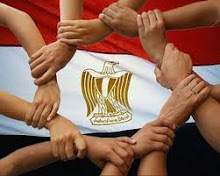
Since Hamas takeover of the Gaza Strip in June of 2007, and even in light of the severe humanitarian crisis in the Gaza Strip in December 2008-January 2009 as the result of Israel’s military offensive against the Gaza Strip, under harsh criticism from the Arab world and Egyptian public opinion, Egypt refused to open Rafah Crossing to regular traffic opposite the Hamas regime (Kadman, p. 132), and supported the reopening according to a renewed agreement of all parties who consented to the AMA—Israel, the PA, the US, and the EU—regarding opening the Palestinian side of the border (p. 126). However, Egypt agreed to open the border, ad hoc, in response to humanitarian needs of the Gaza Strip (p. 125). Furthermore, Egypt viewed Hamas as devoid of international legitimacy and recognizes the PA as the sole legitimate leadership of the Palestinian people (Kadman, p.126), and argued that opening the Crossing opposite Hamas it automatically translates into a new political reality, a de facto recognition of Hamas's legitimacy (Howeidy, 2009. P.1).
However, the Israeli closure of the Gaza Strip created an obligation for Egypt to open Rafah by virtue of its obligation to respect the right of transfer of the residents of the blocked Gaza Strip, and by virtue of its obligation to act against the violation of the Fourth Geneva Convention by Israel (Kadman, p. 160). Moreover, since Egypt was not a party in the 2005 AMA between Israel and PA, therefore, Egypt has no obligation under treaty law to close the Rafah Crossing even when the agreement expired after 12 months of its implantation and was not renewed (Janis & Noyes, 2006, p. 92). Therefore, Egypt seemed to be in violation of the laws of jus cognes, the law of compelling norms, which are human rights violations and humanitarian crisis in Gaza caused by the blockade and the war.
On November 15, 2005, negotiators from Israel and the Palestinian Authority (PA) signed the Agreement on Movement and Access (AMA) facilitating the movement of people and goods within the Palestinian Territories and on opening an international crossing on the Gaza-Egypt border, also known as Rafah Crossing that will put the Palestinians in control of the entry and exit of people. The negotiations were facilitated by US Secretary of State Condoleezza Rice, European Union High Representative for the Common Foreign and Security Policy Javier Solana. The agreement also aimed at promoting peaceful economic development and improving the humanitarian situation in the Palestinian Territories and was heralded as a relative breakthrough in the Israeli-Palestinian stalemate: an agreement on border crossings in and out of the Gaza Strip (Prusher & Murphy, 2006, p. 1). A mix of Egyptian soldiers and European observers would monitor and control transit of goods and people in coordination with the Palestinian Authority (PA) security forces. In theory, it was ideal. Israelis would meet security needs by tracking cross-border travel - but only from a distance. Gazans would enjoy longed-for freedom from loathed Israeli checkpoints.
According to the terms of the AMA which is published on the United Nations Website, the parties have agreed that:
-The PA will ensure that the passages will be protected on the Palestinian side of the border and will train and upgrade the management of all crossings to ensure efficiency and effectiveness.
-The PA will establish, without delay, a unified system of border management.
-It is understood that security is a prime and continuing concern for Israel and that appropriate arrangements to ensure security will be adopted.
-Rafah will be operated by the Palestinian Authority on its side, and Egypt on its side, according to international standards, in accordance with Palestinian law and subject to the terms of this agreement. --Rafah will be opened as soon as it is ready to operate at an international standard in accordance with the specifications of this agreement and as soon as the 3rd party is on site, with a target date of November 25.
-Use of the Rafah crossing will be restricted to Palestinian ID card holders and others by exception in agreed categories with prior notification to the GoI (Government of Israel) and approval of senior PA leadership.
-The 3rd party will ensure the proper procedures are followed and will advise both sides of any information in its possession pertaining to the people applying to cross under these exceptions.
-These procedures will remain in place for a period of 12 months, unless the 3rd party delivers a negative evaluation of the PA running the Rafah crossing. This evaluation will be done in close coordination with both sides and will give due consideration to the opinion of both sides.
-Rafah will also be used for export of goods to Egypt.
-Rafah will be the only crossing point between the Gaza Strip and Egypt (with the exception of Kerem Shalom for the agreed period).
-The PA will act to prevent the movement of weapons and explosives at the Rafah crossing. The 3rd party will have the authority to ensure that the PA complies with all applicable rules and regulations concerning the Rafah crossing point and the terms of this agreement. In case of non-compliance the 3rd party has the authority to order the re-examination and reassessment of any passenger, luggage, vehicle or goods. The 3rd party will be the European Union.
According to Gutman, 2009, the Palestinians took control of the border as soon as Nov. 25, according to the agreement. The Palestinian Authority pledged to prevent smuggling of weapons or militants across the border. European Union representatives on the ground will monitor compliance, as will a joint Israeli-Palestinian-European control room, according to the agreement. Goods coming into Gaza from its revamped border terminal at Rafah will be monitored by sophisticated X-ray equipment. Israel also agreed to ease restrictions it applied to West Bank travel after Palestinian attacks on Israelis
However, in June of 2007, the militant Islamic group Hamas, took control of the internal government in Gaza Strip, ousting the Palestinian Authority and its security forces which belonged to the Fattah movement, Hamas’s rival. In the year between the capture of Israeli soldier Gilad Shalit in June of 2006 and the Hamas takeover in June of 2007, Israel kept Rafah Crossing closed 85% of the time, since June 2007, Rafah Crossing has been closed permanently, except for random and limited openings by Egypt, which meet only 3% of the needs of the residents of the Gaza Strip to enter and leave (Kadman, 2009, p. 7).
Following Hamas’s took control of the Gaza Strip, Israel as well as the EU were no longer involved in the monitoring of the Rafah crossing. Israel imposed a blockade on Gaza borders to force Hamas to concede power, and hence the Rafah Crossing was closed. It was exacerbated when Israel imposed a strict economic siege on Gaza both as a punishment for Gazans having elected Hamas in free and fair elections, and as a tactic to remove it from power. The Rafah border crossing, the Gazans' only gateway to the world that isn't controlled by their occupier, inevitably emerged as a symbol for the latest stage of the 60-year-old conflict, serving as a litmus test of Egypt's relations with the three parties on the other side of the border, Hamas, the PA and Israel (Howeidy, 2009, p.1)
Several Israeli politicians called for a unilateral reoccupation of the "Philadelphi" route, the name for the strip of land between Gaza and Egypt. On December 27, 2008, Israel launched massive air and ground campaign into Gaza in response to rocket attacks by Hamas in the Gaza Strip into northern Israel, in order to destroy Hamas rockets launching capabilities and bombarded the Gaza-Egypt border in what officials say are antismuggling operations (Prusher & Murphy, pp. 1-2).
According to the 2009 report by the Israeli Physicians for Human Rights (Gisha) organization, the closure of Rafah had severe implications for the residents of Gaza Strip, including preventing access to health care services that are not available in Gaza, preventing access to students and employees, forcing long separations of family members on either side of the border. Therefore, the closure of the Crossing was considered a severe violation of the rights of residents of the Gaza Strip (p. 7)
One of the most pivotal points in the Rafah Crossing agreement was that the role of the Egyptian Army in guarding the border to prevent arms and cash (p.3) smuggling or easy access for militants across the border (p. 2). Instead, Israeli officials say, the Gaza-Egyptian border is being used as a route for arming Hamas and other militant groups in anticipation of widely expected battles with the Israel Defense Forces (p. 2)
The 14km Rafah Crossing is one of five ways in and out of Gaza - It's the only crossing not guarded by Israeli forces. The Rafah border crossing has come to epitomize the geopolitical realities between Egypt and the occupied Palestinian territories -- with all their security and legal complexities -- as never before (Howeidy, 2009, p. 1). Since Hamas took control of Gaza in June 2007 the Egyptian-Gaza borders have been free of any Israeli presence for the first time since 1967. This immediately posed a complex problem for the Egyptian regime (p. 1)
Caroll J, 2007, elaborated on Egypt’s dilemma in policing the Rafah Crossing. There is "genuine concern" that Palestinian violence in Gaza could spill over into the Sinai, says Walid Kazziha, chair of the political science department at the American University in Cairo. "It is in Egypt's national interest that they have to look after" the smuggling issue. But he also notes that the Egyptian government faces domestic pressure to support Palestinians. "One thing that embarrasses the Egyptians is the Israelis asking Egypt to take [what would amount to] violence against the Palestinians," he says. "So it's a very tight rope." (p.1). Egypt itself is not a natural ally for Islamist Hamas, which is an offshoot of the country's banned Muslim Brotherhood, the country's powerful opposition movement. Terror attacks in the Sinai over the years have been blamed by the Egyptian government on local Bedouins who have been radicalized by contact with Palestinian militants (Prusher & Murphy, p. 2).
Furthermore, Egypt viewed Hamas as devoid of international legitimacy and recognizes the PA as the sole legitimate leadership of the Palestinian people (Kadman, p.126). Therefore, Egypt increased border patrols in response to Israel's complaints to quell weapon smuggling across the border, and a result Israel's critique has focused more on the smuggling and less on the Egyptian role, perhaps in part due to the sensitive point in negotiations over a possible prisoner exchange (Prusher & Murphy, p.2)
In the course of a week President Hosni Mubarak addressed the issue twice. He said that Egypt will not open the border because Gaza is an occupied territory and remains, therefore, the responsibility of Israel, the occupying force (Howeidy, 2009, p. 1). A few days later he said that Egypt would not open the border "in the absence of the Palestinian Authority and European monitors", a reference to the 2005 border agreement formulated between the Palestinian Authority (PA) and Israel a year before the 2006 Palestinian parliamentary elections brought Hamas to power. The agreement expired a year after it went into effect and has not been renewed since (p. 1)
At the heel of the Israeli offensive in Gaza in December of 2008, various statements by the UN Secretary-General described the level of the humanitarian crisis in Gaza Strip. On December 27, 2008, the Secretary-General expressed deep concern about the heavy bloodshed in Gaza, which he described as “unacceptable”, as well as the continuation of violence in southern Israel. The Secretary-General also “reiterated Israel’s obligation to uphold international humanitarian and human rights law and condemns excessive use of force leading to the killing and injuring of civilians”, and “large scale destruction” in Gaza. Moreover, the Secretary-General reiterated his previous calls for humanitarian supplies to be allowed into Gaza to aid the distressed civilian population. In another statement on December 29, 2009, the Secretary-General “stressed the need for the strict observance of international humanitarian law”, and reiterated his call that “unhindered access should be ensured for the delivery of humanitarian assistance” “much needed assistance and alleviate civilian suffering”. He also stated that “Israel must keep opening all border crossings necessary for the continued provision of humanitarian supplies”
Moreover, the World Bank warned of a growing public health risk because of the lack of drinking water and a collapse of Gaza's wastewater systems that has sent sewage into the streets (Mitnick, 2009, p. 1). The US Congress expressed the signers' "deep concern for the humanitarian situation in the Gaza Strip" and requested "immediate action by the U.S. to address this crisis.” It described in detail the "dire" situation on the ground in Gaza and stated "it is imperative that we work with Israel to open the borders so that the wounded can be treated, basic aid can reach those in need, and rebuilding can begin." Adding that "the failure to address this humanitarian emergency has the potential to produce a crisis of even more unspeakable proportions." (McArther, 2009, p. 23). Congressman Brian Baird (D-WA) after his visit to the Gaza Strip on February 20, 2009 stated that “The amount of physical destruction and the depth of human suffering here is staggering," said Baird. "Entire neighborhoods have been destroyed, schools completely leveled, fundamental water, sewer, and electricity facilities hit and relief agencies heavily damaged. The personal stories of children being killed in their homes or schools, entire families wiped out, and relief workers prevented from evacuating the wounded are heart wrenching--what went on here, and what is continuing to go on, is shocking and troubling beyond words." (Baird, 2009, p.21)
However, since Hamas takeover of the Gaza Strip in June of 2007, and even in light of the severe humanitarian crisis in the Gaza Strip in December 2008-January 2009 as the result of Israel’s military offensive against the Gaza Strip, under harsh criticism from the Arab world and Egyptian public opinion, Egypt refused to open Rafah Crossing to regular traffic opposite the Hamas regime (Kadman, p. 132), and supported the reopening according to a renewed agreement of all parties who consented to the AMA—Israel, the PA, the US, and the EU—regarding opening the Palestinian side of the border (p. 126). However, Egypt agreed to open the border, ad hoc, in response to humanitarian needs of the Gaza Strip (p. 125). Egypt stated that it is committed to the AMA agreement although Egypt itself was not a party to the agreement. Therefore, Egypt says it has not been able to open Rafah to regular traffic since Hamas takeover of the Gaza Strip in June 2007, and by opening the Crossing Egypt would violate the AMA, which requires the presence of the PA and the European force on the Palestinian side of the border, and Israel’s presence at Kerem Shalom—conditions which have not been fulfilled since that date (p. 126)
Egypt further argued that Israel consent to the open the Crossing was necessary since Israel continues controlling the West Bank and the Gaza Strip, and that the peace process, which Egypt supports, includes the gradual transfer of power from Israel to the PA, the legitimate representative of the Palestinians, according to Egypt (p. 126). Furthermore, in order to reach a new or renewed international arrangement on opening Rafah, Egypt is negotiating with various parties including Israel, Hamas, and the PA to open the border, including the EU and the US (p. 130). However, the Palestinian parties’ refusal to compromise on dividing control of the crossing constitutes the largest obstacle to opening Rafah (p. 131). For its part, the Palestinian Authority objected to opening the Crossing on a regular basis by Egypt opposite Hamas, so as not to legitimize the latter’s rule (Kadman, p. 136)
Janis & Noyes, 2006, stated that there are three principal formal sources of IL set forth in Article 38(1) of the ICJ; these are the rules that the Court “shall apply” as it decided “in accordance with IL such disputes as submitted to it”:”(a) International conventions, whether general or particular, establishing rules expressly recognized by the consenting states; (b) international custom, as evidence of a general practice accepted as law; (c) the principles of law recognized by civilized nations. Although the first two sources—treaty and custom—may be said by positivists to be more or less consensual among states, the third source—general principles of law—clearly involves some judicial or doctrinal initiative beyond a search for inter-state agreement on rules (p. 138). Historically, one of the most important sources of the law of nations was natural law, referred to as jus cognes or compelling norms (p. 138)
Compelling norms or jus cognes a norm that enjoys a higher rank in the international hierarchy than treaty law and even ordinary customary rules, principle at most issue cannot be derogated from by States through int’l treaties or local or special customs or even general customary rules not endowed with the same normative force (Janis & Noyes, p. 147)
Vienna’s Professor Alfred von Verdross wrote in 1937, that jus cognes consists of the general principle prohibiting states from concluding treaties contra bonos mores, which means that no judicial order can, therefore, admit treaties between juridical subjects, which are obviously in contradiction to the ethics of a certain community. Furthermore, treaties are regarded as being contra bonos mores if it restricts the liberty of one contracting party in an excessive or unworthy manner or which endanger its most important rights. Those norms of treaties which are incompatible with this goal of all positive law must be regarded as void (Janis & Noyes, p. 144). In other words, Professor Verdross argued, a treaty norm is void if it is either in violation of a compulsory norm of general international law or contra bonos mores. A treaty norm is contra bonos mores if a state is prevented by an international treaty from fulfilling the universally recognized tasks of a civilized state (p. 145). Contra bonos mores is a category Verdross justified as stemming from the general principle of law recognized by civilized nations (p. 146)
The 1937 article above by Vienna’s Professor Alfred von Verdross has been singled out as an important step in the development of Article 53 of the Vienna Convention on the law of the Treaties concerning peremptory norms of international law (Janis & Noyes, p. 146), which stipulates that “A treaty is void if, at the time of its conclusion, it conflicts with a peremptory norm of general international law. For the purposes of the present Convention, a peremptory norm of general international law is a norm accepted and recognized by the international community of States as a whole as a norm from which no derogation is permitted and which can be modified only by a subsequent norm of general international law having the same character. Therefore, Egypt’s claims that it’s obligated by the expired Agreement on Movement and Access, which Egypt was not even a party, not to open the Rafah Crossing unless a new or renewed agreement is reached is considered a violation of the peremptory norm of general international law, which in this case the humanitarian crisis in Gaza and the human rights violations.
Article 43 of the Hague Regulation, which are part of international customary law, binding upon all countries imposes upon an occupying power the obligation to maintain public order and guarantee the existence of normal public life for the civilian population. Freedom of movement is necessary to guarantee normal life (Kadman, p. 150). Moreover, Articles 27 & 33 of the Fourth Geneva Convention on the protection of Victims of International Armed Conflicts, to which both Israel and Egypt are parties stated that “protected persons are entitled, in all circumstances, to respect for their persons, their honor, their family rights, their religious convictions and practice, and their manners and customs” “No protected person may be punished for an offense he or she has not personally committed” and adds that collective punishments are prohibited (Kadman, p. 151)
Egypt has an obligation under international humanitarian law to open the Rafah Crossing to allow the passage of humanitarian aid, which is derived from Israel’s actions by closing other crossings to and from Gaza and uses Rafah Crossing to implement a policy of collective punishment. Therefore, the Israeli closure of the Gaza Strip creates an obligation for Egypt to open Rafah by virtue of its obligation to respect the right of transfer of the residents of the blocked Gaza Strip, and by virtue of its obligation to act against the violation of the Fourth Geneva Convention by Israel (Kadman, p. 160). Moreover, since Egypt was not a party in the 2005 AMA between Israel and PA, therefore, Egypt has no obligation under treaty law to close the Rafah Crossing even when the agreement expired after 12 months of its implantation (Janis & Noyes, 2006, p. 92)
Positivists would argue that Egypt as a sovereign has the power to decide who and what shall enter its territory, and it has no obligation to allow passage through its border, except for its obligation to allow the passage of humanitarian aid, which Egypt continued to do only on ad hoc bases. In fact the judgment of PCIJ in 1927 (Permanent Court of International Justice) in the Lotus case has become of the most usually cited positivist opinions about the nature of IL, because it argued in part III that the “rules of law binding upon States therefore emanate from their own free will as expressed in conventions or by usages generally accepted as expressing principles of law”. The ruling of an evenly divided Court in Lotus maintained that all international legal rules are based on state consent: “restrictions upon independence of States cannot therefore be presumed.” No room was given to general principles of IL: fundamental norms, natural law, or equity as sources of IL; state sovereignty was seen as the fundamental principle of IL from which all other international legal principles and rules are derived (Janis & Noyes, p. 116)
Furthermore, in the 1966 Southwest Africa Cases, the ICJ ruled that humanitarian considerations are not sufficient in themselves to generate legal rights and obligations. The Court can take account of moral principles only in so far as these are given sufficient expression in legal forms. The secret trust itself must be or becoming something more than a moral or humanitarian ideal. It must be given judicial expression and be clothed in legal form. However, the Court in 1970 moved closer to Verdross position when it recognized in the Barcelona Traction Case, the concept of “obligations erga omnes”—the obligations of a state towards the international community as a whole. The Court cited as examples, the international legal proscriptions against interstate aggression, genocide, slavery, and racial discrimination (Janis & Noyes, p. 147)
Therefore, Egypt under obligations erg omnes, has an obligation towards the international community as a whole to intervene using its sovereign power and ease suffering of 1.5 million Palestinians and open the Rafah Crossing to allow the flow of humanitarian aid, and allow Palestinians their basic human right of movement and access. Furthermore, Egypt should invoke Articles 27 & 33 of the Fourth Geneva Convention on the protection of Victims of International Armed Conflicts by allowing civilians in Gaza passage to seek refuge and humanitarian assistance. By not doing so, Egypt is in violation of the law of compelling norms, jus cognes, created by the humanitarian crisis in Gaza and expressed in the UN Secretary-General statements and members of the US Congress.
References
Anthony D’Amato & Jennifer Abbassi (2006). International Law Today (1st ed). St. Paul, MN: West Publishing
Baird, B. (April, 2009). U.S. Congressmen visit Gaza, call for immediate relief, changes in U.S.
policy. Washington Report on Middle East Affairs, 28 (3), pp. 21-31.
Carroll, J. (May, 2007). Egypt's Gaza gateway: crossroad of frustration. Christian Science
Monitor, 99 (109), pp.1-4.
Gutman M. (November, 2005) Mideast deal gives Palestinians control of Gaza-Egypt
border. USA Today (n.d).
Howeidy, A. (January, 2009). All eyes on Rafah. Al Ahram weekly.
Kadman, N. (March, 2009). Rafah Crossing: Who holds the keys? Physicians for Human
Rights-Israel.
McArthur, S. (April, 2009). 111th Congress expresses its “vigorous support” for Israel’s Gaza
massacre. Washington Report on Middle East Affairs, 28 (3), pp. 22-23.
Mark W. Janis & John E. Noyes (2006). International Law: Cases and Commentary (3rd ed). St.
Paul, MN: West Publishing
Mitnick, J. (January, 2009). Can Egypt broker a Gaza true again? Christian Science Monitor, 101 (30), pp. 1-5.
Prusher, I. & Murphy, D. (October, 2006). Trouble sealing Egypt-Gaza border. Christian
Science Monitor, 98 (233) pp. 1-6.
UN-Agreement on Movement and Access (AMA), retrieved from
http://domino.un.org/UNISPAL.NSF/361eea1cc08301c485256cf600606959/c9a5aa5245d910bb852570bb0051711c!OpenDocument,
Saturday, May 16, 2009

Monday, May 4, 2009
Keeping the peace in 21st century, role of international organizations
In the 19th and 20th centuries, the international legal circuits rejected the just war doctrine prevailed during the 5th and 6th centuries, which was pursued to avenge injuries against the enemy. War became a legitimate exercise of sovereign power, and sometimes inevitable if the parties involved chose so. Despite of its perceived legality, use of force was subject to restraints set forth by treaties, for example the 1907 Hague Convention No. II, and the authority of the general international law.
According the UN Charter, the Security Council should be the sole grantor of legitimacy regarding the use of force, assuming that all member states abide by Article 2 (4). The exceptions to the use of force without Security Council's approval would be the states' inherent right of self-defense (individual or collective) against an armed attack and only pending UN measures. Chapter VII lists several other measures to combat a belligerent state such as sanctions, with the approval of the major powers, before agreeing on the collective use of force to counter threats to peace and security. Article 51, which held legitimate “the inherent right of individual or collective self-defense in response to an “armed attack” even before the Security Council takes “the necessary measures to maintain international peace and security”
The Caroline case has been regarded as legal foundation of international law rules governing the legality of use of force in self-defense. The Caroline dictum says that every state has a right to strike first when the threat posed is "instant, overwhelming, leaving no choice of means and no moment for deliberation.". The Nuremberg Tribunal invoked the rule in Caroline when rejecting German leaders’ arguments that they had been entitled to attack Norway in self-defense. The concept of anticipatory or preemptive self-defense was then created, particularly in the context of nuclear strategy by some publicists as result of the Caroline case arguing that the right of self-defense was available when “the necessity of that self-defense is instant, overwhelming and leaving no choice of means and no moment for deliberation”. However, following WWI, states adopted new legal constraints on the use of force (p. 547). After WWII, the UN Charter generally prohibited the unilateral use of force by states.
Less than a decade into the 21st century, there is already a widespread sense that the world faces challenges and threats of unprecedented scope, scale and complexity. Global terrorism emerged as one of the main challenges to international peace and security since beginning of the 21st century. The current rules of international law were written for conventional, inter-state conflicts, while even the definition of terrorism and terrorists remains elusive and ill-defined. Yet, in the era of globalization and heightened interconnectedness, the existing international organizations, mainly the UN through its organizations such the Security Council, the General Assembly and International Court of Justice should remain at the forefront to meet the challenges of world peace in the 21 century.
Paul Szasz in 2002 argued that in recent years the Security Council has increasingly adopted decisions that deal not with any particular conflict or situation but, rather with conflicts in general. Thus, it has addressed the protection of children and civilians, the role of women with respect to peace and security, humanitarian questions and even international terrorism. Nevertheless, the operative paragraphs of these resolutions are not formulated in compulsory terms. He added that the council might even consider extreme violations of human rights or humanitarian law, or massive assaults on the international environment, to constitute unacceptable threats to the peace. Furthermore, the UN Secretary-General’s High-Level Panel on Threats, Challenges and Change endorsed the emerging norm that there is a collective international responsibility to protect, exercisable by the Security Council authorizing military intervention as a last resort, in the event of genocide and other large-scale killing, ethnic cleansing or serious violations of international humanitarian law which sovereign Governments have proved powerless or unwilling to prevent
On September 28, 2001, the Security Council departed from its previous limited and cautious practice and adopted Resolution 1373, by which it decided that all states shall take certain actions against the financing of terrorist activities, as well as a miscellany of other actions designed to prevent any support for terrorist activities. Security Council’s Resolution 1373 added another dimension to the concept of “armed attack” to include attacks by non-state actors such as terrorist groups, which then gave the State(s) the right of individual or collective self-defense under Article 51. However, in order to ensure that the authorization to use force to combat terrorism will further contribute to peace and stability; the UN Charter still imposed restriction on the right of states to use force in self-defense against an armed attack of sufficient scale and effect by requiring the victim state to abide by the rules of “necessity” and “proportionality” in assessing an armed attack and measuring its [state] response.
Richard Gardner, critic of the Bush's Doctrine, suggested four modest reinterpretations of the UN Charter, which seem to be in the right direction that the world should head into in response to unprecedented circumstances of terrorism and issues of states’ rights to self-defense. These measures include:
(1) Armed force may be used by UN member even without the Security Council approval to destroy terrorist groups operating on the territory of other members when those other members fail to discharge their international law obligations to suppress them
(2) Armed force may also be used to prevent a UN member from transferring WMDs to terrorist groups
(3) Article 51 continues to limit self-defense to cases of actual or imminent armed attack in accordance with the Caroline doctrine, but self-defense can be extended to permit a state to rescue its citizens (and others) faced with clear threat to their security.
(4) A right of “humanitarian intervention” permits military action by the UN or regional organizations to prevent genocide or similar massive human rights violaitons
Furthermore, the Report of the High-Level Panel on Threats, Challenges and Change, in 2004, asserted that the effectiveness of the global collective security system depends ultimately not only on the legality of decisions but also on the common perception of their legitimacy. In considering whether to authorize or endorse the use of military force, the Security Council should always address at least five basic criteria of legitimacy:
(a) Seriousness of threat. The threat must be considered clear and serious.
(b) Proper purpose. Is it clear that the primary purpose of the proposed military action is to halt or avert the threat in question?
(c) Last resort. Has every non-military option for meeting the threat in question been explored?
(d) Proportional means. Are the scale, duration and intensity of the proposed military action the minimum necessary to meet the threat in question?
(e) Balance of consequences. Will the consequences of action not likely to be worse than the consequences of inaction?
However, wider participation by other states is required the decision-making process in order to ensure Security Council’s Resolutions regarding war and peace more credible and representative of the will of the international community. The Uniting for Peace Resolution in 1950, or Acheson Plan, argued based on Articles 10, 11, 14 of the Charter making the Assembly the Council’s partner in wielding “authority and responsibility for matters affecting international peace, sounds more promising today in circumventing the veto-bound Council, which has often been accused of yielding to the wishes of its permanent members. By giving the Assembly more authority, it would step in to organize the collective use of force against an aggressor as it happened during the Korean conflict.
Among areas where international organizations’ efforts are falling short are peacekeeping efforts and effects of economic sanctions invoked by Chapter VII on ordinary population and non-target states. The Suez crisis in 1956 thus confirmed the UN in its most fruitful line of endeavor: the stationing of international peacekeeping forces between mutually hostile antagonists at the crucial moment in a dispute when both sides perceive disengagement as preferable to continued hostilities. In order to make the complex peacekeeping or peace-building operations more effective, it is important to identify specific authority for peacekeeping in the text of the Charter.
Furthermore, the 1962 ICJ ruling that the Assembly should not recommend measures while the Council is dealing with the same matter unless the Council requests it to do should also be overturned in order to allow the Assembly to approve peacekeeping operations when the Council refused to act. Another challenge to make the peacekeeping or building more effective is to ensure reliable funding for and national support of broad UN mandates.
Sanctions imposed through Chapter VII of the UN Charter prohibit imports into a target country, exporters in other states and the economies of other states may be harmed (double-edged sword). Security Council should take appropriate measures to ensure that sanctions do not create severe hardships for the ordinary population of a target state and to mitigate the hardships of sanctions in non-target states. Furthermore, a mechanism must be regularly available to review the humanitarian impact of sanctions.
References
Anthony D’Amato & Jennifer Abbassi (2006). International Law Today (1st ed). St. Paul, MN: West Publishing
Mark W. Janis & John E. Noyes (2006). International Law: Cases and Commentary (3rd ed). St. Paul, MN: West Publishing
According the UN Charter, the Security Council should be the sole grantor of legitimacy regarding the use of force, assuming that all member states abide by Article 2 (4). The exceptions to the use of force without Security Council's approval would be the states' inherent right of self-defense (individual or collective) against an armed attack and only pending UN measures. Chapter VII lists several other measures to combat a belligerent state such as sanctions, with the approval of the major powers, before agreeing on the collective use of force to counter threats to peace and security. Article 51, which held legitimate “the inherent right of individual or collective self-defense in response to an “armed attack” even before the Security Council takes “the necessary measures to maintain international peace and security”
The Caroline case has been regarded as legal foundation of international law rules governing the legality of use of force in self-defense. The Caroline dictum says that every state has a right to strike first when the threat posed is "instant, overwhelming, leaving no choice of means and no moment for deliberation.". The Nuremberg Tribunal invoked the rule in Caroline when rejecting German leaders’ arguments that they had been entitled to attack Norway in self-defense. The concept of anticipatory or preemptive self-defense was then created, particularly in the context of nuclear strategy by some publicists as result of the Caroline case arguing that the right of self-defense was available when “the necessity of that self-defense is instant, overwhelming and leaving no choice of means and no moment for deliberation”. However, following WWI, states adopted new legal constraints on the use of force (p. 547). After WWII, the UN Charter generally prohibited the unilateral use of force by states.
Less than a decade into the 21st century, there is already a widespread sense that the world faces challenges and threats of unprecedented scope, scale and complexity. Global terrorism emerged as one of the main challenges to international peace and security since beginning of the 21st century. The current rules of international law were written for conventional, inter-state conflicts, while even the definition of terrorism and terrorists remains elusive and ill-defined. Yet, in the era of globalization and heightened interconnectedness, the existing international organizations, mainly the UN through its organizations such the Security Council, the General Assembly and International Court of Justice should remain at the forefront to meet the challenges of world peace in the 21 century.
Paul Szasz in 2002 argued that in recent years the Security Council has increasingly adopted decisions that deal not with any particular conflict or situation but, rather with conflicts in general. Thus, it has addressed the protection of children and civilians, the role of women with respect to peace and security, humanitarian questions and even international terrorism. Nevertheless, the operative paragraphs of these resolutions are not formulated in compulsory terms. He added that the council might even consider extreme violations of human rights or humanitarian law, or massive assaults on the international environment, to constitute unacceptable threats to the peace. Furthermore, the UN Secretary-General’s High-Level Panel on Threats, Challenges and Change endorsed the emerging norm that there is a collective international responsibility to protect, exercisable by the Security Council authorizing military intervention as a last resort, in the event of genocide and other large-scale killing, ethnic cleansing or serious violations of international humanitarian law which sovereign Governments have proved powerless or unwilling to prevent
On September 28, 2001, the Security Council departed from its previous limited and cautious practice and adopted Resolution 1373, by which it decided that all states shall take certain actions against the financing of terrorist activities, as well as a miscellany of other actions designed to prevent any support for terrorist activities. Security Council’s Resolution 1373 added another dimension to the concept of “armed attack” to include attacks by non-state actors such as terrorist groups, which then gave the State(s) the right of individual or collective self-defense under Article 51. However, in order to ensure that the authorization to use force to combat terrorism will further contribute to peace and stability; the UN Charter still imposed restriction on the right of states to use force in self-defense against an armed attack of sufficient scale and effect by requiring the victim state to abide by the rules of “necessity” and “proportionality” in assessing an armed attack and measuring its [state] response.
Richard Gardner, critic of the Bush's Doctrine, suggested four modest reinterpretations of the UN Charter, which seem to be in the right direction that the world should head into in response to unprecedented circumstances of terrorism and issues of states’ rights to self-defense. These measures include:
(1) Armed force may be used by UN member even without the Security Council approval to destroy terrorist groups operating on the territory of other members when those other members fail to discharge their international law obligations to suppress them
(2) Armed force may also be used to prevent a UN member from transferring WMDs to terrorist groups
(3) Article 51 continues to limit self-defense to cases of actual or imminent armed attack in accordance with the Caroline doctrine, but self-defense can be extended to permit a state to rescue its citizens (and others) faced with clear threat to their security.
(4) A right of “humanitarian intervention” permits military action by the UN or regional organizations to prevent genocide or similar massive human rights violaitons
Furthermore, the Report of the High-Level Panel on Threats, Challenges and Change, in 2004, asserted that the effectiveness of the global collective security system depends ultimately not only on the legality of decisions but also on the common perception of their legitimacy. In considering whether to authorize or endorse the use of military force, the Security Council should always address at least five basic criteria of legitimacy:
(a) Seriousness of threat. The threat must be considered clear and serious.
(b) Proper purpose. Is it clear that the primary purpose of the proposed military action is to halt or avert the threat in question?
(c) Last resort. Has every non-military option for meeting the threat in question been explored?
(d) Proportional means. Are the scale, duration and intensity of the proposed military action the minimum necessary to meet the threat in question?
(e) Balance of consequences. Will the consequences of action not likely to be worse than the consequences of inaction?
However, wider participation by other states is required the decision-making process in order to ensure Security Council’s Resolutions regarding war and peace more credible and representative of the will of the international community. The Uniting for Peace Resolution in 1950, or Acheson Plan, argued based on Articles 10, 11, 14 of the Charter making the Assembly the Council’s partner in wielding “authority and responsibility for matters affecting international peace, sounds more promising today in circumventing the veto-bound Council, which has often been accused of yielding to the wishes of its permanent members. By giving the Assembly more authority, it would step in to organize the collective use of force against an aggressor as it happened during the Korean conflict.
Among areas where international organizations’ efforts are falling short are peacekeeping efforts and effects of economic sanctions invoked by Chapter VII on ordinary population and non-target states. The Suez crisis in 1956 thus confirmed the UN in its most fruitful line of endeavor: the stationing of international peacekeeping forces between mutually hostile antagonists at the crucial moment in a dispute when both sides perceive disengagement as preferable to continued hostilities. In order to make the complex peacekeeping or peace-building operations more effective, it is important to identify specific authority for peacekeeping in the text of the Charter.
Furthermore, the 1962 ICJ ruling that the Assembly should not recommend measures while the Council is dealing with the same matter unless the Council requests it to do should also be overturned in order to allow the Assembly to approve peacekeeping operations when the Council refused to act. Another challenge to make the peacekeeping or building more effective is to ensure reliable funding for and national support of broad UN mandates.
Sanctions imposed through Chapter VII of the UN Charter prohibit imports into a target country, exporters in other states and the economies of other states may be harmed (double-edged sword). Security Council should take appropriate measures to ensure that sanctions do not create severe hardships for the ordinary population of a target state and to mitigate the hardships of sanctions in non-target states. Furthermore, a mechanism must be regularly available to review the humanitarian impact of sanctions.
References
Anthony D’Amato & Jennifer Abbassi (2006). International Law Today (1st ed). St. Paul, MN: West Publishing
Mark W. Janis & John E. Noyes (2006). International Law: Cases and Commentary (3rd ed). St. Paul, MN: West Publishing
Wednesday, April 15, 2009
International Law and Individuals' Rights
During the 19th and early 20th century, individuals were viewed as “objects” of IL, and were not deemed to be”subjects” of IL (Janis & Noyes, 2006, p. 363). Positivists like Jeremy Bentham in 1789 created the term “International Law”, which he defined as the law that relates to the “mutual transactions between sovereigns as such”, and therefore, categorizing laws on the basis of “the persons whose conduct is the object of the law”. Bentham concluded that IL had only states as its subjects (Janis & Noyes, p. 364).
Positivists viewed International Law (IL) as a set of rules with states as its subjects, whereas municipal law was thought of as pertaining to individuals who are subjects of a single state. Legal positivism had taken the 18th century law of nations, a law common to individuals and states, and transformed it into public and private IL. The former was deemed to apply to states, the latter to individuals. Positivists criticized both sides of the discipline. Public IL was “international” but not really “law”. Private IL was “law” but not really “International”. In short, positivists reject the notion that individuals are proper subjects of IL (p. 364)
Before positivism, there was no theoretical insistence that the rules f the law of nations applied only to states (Janis & Noyes, p. 363). The dominant sentiment was of those like William Blackstone who viewed both individuals and states were as the proper subjects of the law of nations. Blackstone distinguished his law of nations from other sorts of law not on the basis of its subjects, and saw that the rule of law of nations as universal, emanating either from natural justice or from the practice of many states. Municipal legal rules, however, emanated from a single state (p. 364)
However, only in recent decades has there been a fundamental shift in beliefs that the rights of individuals may be more important than the needs of states, not simply within nations but across the international system (Week 6 lecture, IL and Human Rights, p. 1). While law can be categorized on the basis of its subjects, in practice, the law of nations and IL have concerned more than the legal rights of states (Janis & Noyes, p. 365). Even during the high tide of positivism, the US Supreme Court had no difficulty seeing individuals as subjects of IL. The Court held that “IL is part of our law, and must be ascertained and administered by the courts of justice of appropriate jurisdiction, as often as questions of right depending upon it are duly presented for their determination (p. 364)
As Janis & Noyes explained, the concept that individuals can be subjects, as well as objects, of IL logically divides into individual rights at IL and individual duties. The principle that law should protect the rights of individuals against the abuses of governments can be at least be dated back to John Locke’s Two Treaties of Government published in 1690. He believed that human rights, not governments, came first in the natural order of things. In the 18th century, the American declaration of Independence, the French Declaration of the Rights of Man and Citizen, and the US Bill of Rights constituted the documentary foundation on which two centuries of legal protection of human rights in municipal law which has been built (p. 368)
Nonetheless, the trials of Nazi war criminals after the Second World War highlighted the limitations of positivism. Nuremberg re-established plainly and forcefully that the rules of IL should and do apply to individuals. The Charter of the International Military Tribunals at Nuremberg explicitly made individuals subjects to Int’l rules relating to crimes against peace, war crimes, and crimes against humanity (Janis & Noyes, p. 365). Among the main lessons from the Nuremberg Tribunal is that there are individual international rights and obligations that transcend state boundaries. Prior to Nuremberg, it was argued that one of the cornerstones of the Westphalian system of international relations was the principle that sovereign states should be free of outside interference in regulating their own citizens in their own territories (p. 367).
However, the Nuremberg tribunals upheld the fact that individuals rights at IL permeate state sovereignty, permitting outsiders to evaluate how well a state does protecting the rights of inviduals, citizens as well as aliens, in its own territory. It argued that it is wrong, both in terms of describing reality and in terms of preferential expression, for the theory of IL to hold that individuals are outside the ambit of IL rules. Hence, the definition of “nation” under International Law became not limited only to the national state but also the individuals who are the nationals of state. Furthermore, necessary measures taken by all states and international organization to suppress behaviors contrary to IL were consistent with generally recognized principles of IL and should not be considered as intervening in the internal affairs of a state (preservation of the right to self-determination, the prevention of discrimination, the prevention and punishment of genocide, the prohibition against slavery and similar systems and customs, and the prevention and punishment of terrorism) ( D’Amato & Abbassi, p. 111)
Moreover, during the Nuremberg Trial, it was argued that individuals who commit atrocities against humanity must have known that they were acting in defiance of all international laws, and it would be unjust if their wrong was allowed to go unpunished (Janis & Noyes, pp. 373-374). Therefore, the Tribunal rejected the argument that IL is concerned with the actions of sovereign states and provides no punishment for individuals, and further, that where the act in question is an act of state, those who carry it out are not personally responsible, but are protected by the doctrine of the sovereignty of the State (p. 375). The judges ruled that crimes against IL are committed by men, not by abstract entities, and only by punishing individuals who commit such crimes can the provisions of IL be enforced (p. 376). The judges in the Nuremberg Tribunal have relied on precious treaties to reach their verdict, among them was the Treaty of Versailles, which was signed in 1919, and whose Article 7 stipulated that “the official position of defendants shall not be considered as freeing from responsibility, or mitigating punishment. Individuals have int’l duties which transcend the national obligations of obedience imposed by the individual state. Article 3 indicated that “the fact that defendant acted pursuant to orders of his government or of a superior shall not free him from responsibility, but may be considered in mitigation of punishment (Janis & Noyes, p. 370). However, the emergence of int’l human rights law in the mid-20th century has been described as the most radical development in the whole history of IL, since it so speedily reestablished individuals as well as states as subjects if IL, although, the rapid emergence of the rules of int’l human rights law, the development of effective international human rights legal process has been more gradual (p. 377)
Among the main challenges to extending International Law to the individuals rights and wrongs are the notions of state protections and responsibilities. However, the traditional doctrines of state protections and state responsibility have at least three significant limitations. First, individuals may only be protected by their national states, with its elusive national links. Second, when the notion of national links is extended to corporations, even more confusion can result. Finally, and most importantly, the objective view of individuals leaves nationals open to abuse by their own states, since its impractical to conceive of a state protecting its own nationals against itself in IL (Janis & Noyes, p. 339)
Furthermore, the doctrine of state responsibility examined in the Nottebohm and Barcelona Traction provided partial protection, but only so as long as a foreign national injured by a state was effectively protected at the international level by that individual’s national state. However, neither the doctrine of the state sovereignty nor its counterpart, the doctrine of state protection, could shield individuals from abuses committed by their own governments (Janis & Noyes, p. 370)
Among other challenges is that international human rights treaties can trigger a “backlash” against international human rights regimes even in democratic societies when treaties call for behavior with which most voters disagree (Janis & Noyes, p. 388). Cultural norms and religious beliefs constitute another challenge in dealing with both states and individuals who violate international law. Proponents of universal international law like Robert Sloane argued that it’s not cultural values that inhibit societies from realizing a legal order that respects universal human rights; it is the self-serving manipulation of these values by elites. Authoritarian leaders often invoke cultural relativism to cloak the characteristic abuses of totalitarian rule (D’Amato & Abbassi, p. 112). The same argument was echoed by Celestine Naymu, who added that the vague notion of culture provides a convenient scapegoat for government institutions and obscures the state’s responsibility in redressing inequalities (p. 115). Ann Elizabeth, rejected international law should accept that fundamental human rights to be restricted by reference to the requirement of any particular religion (p. 115). Therefore, aggrieved citizens within those religious or cultural communities are thus left without formal legal or constitutional remedies. Unless the overlap between cultural norms and formal law and policy is acknowledged and analyzed, the government can exonerate itself by attributing any negative outcome to culture (p. 117).
To conclude, expanding the reach of international law beyond traditional state-to-state interactions into matters directly involving the rights and wrongs of individuals, have ensured that violators of international law will be brought to justice and held accountable for their crimes, and can argued to have improved the status of international human rights in particular. However, despite the rapid emergence of the rules of international human rights law, the development of effective international human rights legal process has been more gradual (Janis & Noyes, p.377). The debate also continues as to whether culture, religion and matters related to state protection, sovereignty and responsibility (as in the case of US rejection of ICJ) can be reconciled with International Law, or whether International Law should transcend all these factors.
References
Anthony D’Amato & Jennifer Abbassi (2006). International Law Today (1st ed). St. Paul, MN: West Publishing
Mark W. Janis & John E. Noyes (2006). International Law: Cases and Commentary (3rd ed). St. Paul, MN: West Publishing
Positivists viewed International Law (IL) as a set of rules with states as its subjects, whereas municipal law was thought of as pertaining to individuals who are subjects of a single state. Legal positivism had taken the 18th century law of nations, a law common to individuals and states, and transformed it into public and private IL. The former was deemed to apply to states, the latter to individuals. Positivists criticized both sides of the discipline. Public IL was “international” but not really “law”. Private IL was “law” but not really “International”. In short, positivists reject the notion that individuals are proper subjects of IL (p. 364)
Before positivism, there was no theoretical insistence that the rules f the law of nations applied only to states (Janis & Noyes, p. 363). The dominant sentiment was of those like William Blackstone who viewed both individuals and states were as the proper subjects of the law of nations. Blackstone distinguished his law of nations from other sorts of law not on the basis of its subjects, and saw that the rule of law of nations as universal, emanating either from natural justice or from the practice of many states. Municipal legal rules, however, emanated from a single state (p. 364)
However, only in recent decades has there been a fundamental shift in beliefs that the rights of individuals may be more important than the needs of states, not simply within nations but across the international system (Week 6 lecture, IL and Human Rights, p. 1). While law can be categorized on the basis of its subjects, in practice, the law of nations and IL have concerned more than the legal rights of states (Janis & Noyes, p. 365). Even during the high tide of positivism, the US Supreme Court had no difficulty seeing individuals as subjects of IL. The Court held that “IL is part of our law, and must be ascertained and administered by the courts of justice of appropriate jurisdiction, as often as questions of right depending upon it are duly presented for their determination (p. 364)
As Janis & Noyes explained, the concept that individuals can be subjects, as well as objects, of IL logically divides into individual rights at IL and individual duties. The principle that law should protect the rights of individuals against the abuses of governments can be at least be dated back to John Locke’s Two Treaties of Government published in 1690. He believed that human rights, not governments, came first in the natural order of things. In the 18th century, the American declaration of Independence, the French Declaration of the Rights of Man and Citizen, and the US Bill of Rights constituted the documentary foundation on which two centuries of legal protection of human rights in municipal law which has been built (p. 368)
Nonetheless, the trials of Nazi war criminals after the Second World War highlighted the limitations of positivism. Nuremberg re-established plainly and forcefully that the rules of IL should and do apply to individuals. The Charter of the International Military Tribunals at Nuremberg explicitly made individuals subjects to Int’l rules relating to crimes against peace, war crimes, and crimes against humanity (Janis & Noyes, p. 365). Among the main lessons from the Nuremberg Tribunal is that there are individual international rights and obligations that transcend state boundaries. Prior to Nuremberg, it was argued that one of the cornerstones of the Westphalian system of international relations was the principle that sovereign states should be free of outside interference in regulating their own citizens in their own territories (p. 367).
However, the Nuremberg tribunals upheld the fact that individuals rights at IL permeate state sovereignty, permitting outsiders to evaluate how well a state does protecting the rights of inviduals, citizens as well as aliens, in its own territory. It argued that it is wrong, both in terms of describing reality and in terms of preferential expression, for the theory of IL to hold that individuals are outside the ambit of IL rules. Hence, the definition of “nation” under International Law became not limited only to the national state but also the individuals who are the nationals of state. Furthermore, necessary measures taken by all states and international organization to suppress behaviors contrary to IL were consistent with generally recognized principles of IL and should not be considered as intervening in the internal affairs of a state (preservation of the right to self-determination, the prevention of discrimination, the prevention and punishment of genocide, the prohibition against slavery and similar systems and customs, and the prevention and punishment of terrorism) ( D’Amato & Abbassi, p. 111)
Moreover, during the Nuremberg Trial, it was argued that individuals who commit atrocities against humanity must have known that they were acting in defiance of all international laws, and it would be unjust if their wrong was allowed to go unpunished (Janis & Noyes, pp. 373-374). Therefore, the Tribunal rejected the argument that IL is concerned with the actions of sovereign states and provides no punishment for individuals, and further, that where the act in question is an act of state, those who carry it out are not personally responsible, but are protected by the doctrine of the sovereignty of the State (p. 375). The judges ruled that crimes against IL are committed by men, not by abstract entities, and only by punishing individuals who commit such crimes can the provisions of IL be enforced (p. 376). The judges in the Nuremberg Tribunal have relied on precious treaties to reach their verdict, among them was the Treaty of Versailles, which was signed in 1919, and whose Article 7 stipulated that “the official position of defendants shall not be considered as freeing from responsibility, or mitigating punishment. Individuals have int’l duties which transcend the national obligations of obedience imposed by the individual state. Article 3 indicated that “the fact that defendant acted pursuant to orders of his government or of a superior shall not free him from responsibility, but may be considered in mitigation of punishment (Janis & Noyes, p. 370). However, the emergence of int’l human rights law in the mid-20th century has been described as the most radical development in the whole history of IL, since it so speedily reestablished individuals as well as states as subjects if IL, although, the rapid emergence of the rules of int’l human rights law, the development of effective international human rights legal process has been more gradual (p. 377)
Among the main challenges to extending International Law to the individuals rights and wrongs are the notions of state protections and responsibilities. However, the traditional doctrines of state protections and state responsibility have at least three significant limitations. First, individuals may only be protected by their national states, with its elusive national links. Second, when the notion of national links is extended to corporations, even more confusion can result. Finally, and most importantly, the objective view of individuals leaves nationals open to abuse by their own states, since its impractical to conceive of a state protecting its own nationals against itself in IL (Janis & Noyes, p. 339)
Furthermore, the doctrine of state responsibility examined in the Nottebohm and Barcelona Traction provided partial protection, but only so as long as a foreign national injured by a state was effectively protected at the international level by that individual’s national state. However, neither the doctrine of the state sovereignty nor its counterpart, the doctrine of state protection, could shield individuals from abuses committed by their own governments (Janis & Noyes, p. 370)
Among other challenges is that international human rights treaties can trigger a “backlash” against international human rights regimes even in democratic societies when treaties call for behavior with which most voters disagree (Janis & Noyes, p. 388). Cultural norms and religious beliefs constitute another challenge in dealing with both states and individuals who violate international law. Proponents of universal international law like Robert Sloane argued that it’s not cultural values that inhibit societies from realizing a legal order that respects universal human rights; it is the self-serving manipulation of these values by elites. Authoritarian leaders often invoke cultural relativism to cloak the characteristic abuses of totalitarian rule (D’Amato & Abbassi, p. 112). The same argument was echoed by Celestine Naymu, who added that the vague notion of culture provides a convenient scapegoat for government institutions and obscures the state’s responsibility in redressing inequalities (p. 115). Ann Elizabeth, rejected international law should accept that fundamental human rights to be restricted by reference to the requirement of any particular religion (p. 115). Therefore, aggrieved citizens within those religious or cultural communities are thus left without formal legal or constitutional remedies. Unless the overlap between cultural norms and formal law and policy is acknowledged and analyzed, the government can exonerate itself by attributing any negative outcome to culture (p. 117).
To conclude, expanding the reach of international law beyond traditional state-to-state interactions into matters directly involving the rights and wrongs of individuals, have ensured that violators of international law will be brought to justice and held accountable for their crimes, and can argued to have improved the status of international human rights in particular. However, despite the rapid emergence of the rules of international human rights law, the development of effective international human rights legal process has been more gradual (Janis & Noyes, p.377). The debate also continues as to whether culture, religion and matters related to state protection, sovereignty and responsibility (as in the case of US rejection of ICJ) can be reconciled with International Law, or whether International Law should transcend all these factors.
References
Anthony D’Amato & Jennifer Abbassi (2006). International Law Today (1st ed). St. Paul, MN: West Publishing
Mark W. Janis & John E. Noyes (2006). International Law: Cases and Commentary (3rd ed). St. Paul, MN: West Publishing
Thursday, April 2, 2009
International and Municipal Law
The term International Law (IL) in itself implies a framework of rules and regulations, which states are either legally or morally bound by (D’Amato & Abbassi, 2006, p. 13 & p. 26, Janis & Noyes,2006, p. 3). J.L. Brierly in his classic British introduction to International Law defined the discipline “as the body of rules and principles of action which are binding upon civilized states in their relations with one another” (Janis & Noyes, p. 24).
Mark Janis, 2006, wrote about the historical background of International Law and how has it developed over time. He explained how the Romans knew of a jus gentium, a law of nations or a law “common to all men” (Janis & Noyes, p. 1). In the Seventeenth century, a Dutch jurist named Hugo Grotius in his 1625 writing “The Law of War and Peace” recognized law of nations as a set of rules that bound sovereign states, which then became the foundation of the modern discipline of the law of nations. In 1789, the English philosopher Jeremy Bentham renamed “international law”. Today, the law of nations and International Law are used interchangeably (p. 1).
There is an inherent reciprocity in International Law in a sense that for an independent state to be entitled to full benefits of sovereignty and recognition by the international community it must respect the sovereignty and the entitlements of other states (D’Amato & Abbassi, p. 17). Therefore, international law restrains the state power from threatening the sovereignty of other states; otherwise the offending state will lose its entitlements and be subject to hostilities by other countries. The international community accepted the legality of violating nation’s entitlements in order to repudiate that nation initial offense (D’Amato & Abbassi, p. 22).
Among the various sources of International Law where such rules and regulations are identified are treaties and customary laws accepted by the international community. When neither treaties nor customary laws provide a rule or able to decide on a case involving IL; then the judge may look at other sources including the general principles of law recognized by civilized nations, natural law, and jus cogens or compelling norms (Janis & Noyes, p. 128 & p. 138)
Treaties are contracts between two countries or group of countries. Each country can negotiate the terms of such contracts and either becomes a party obligated to fully carry out the terms of the agreement, or makes specific reservations, understandings or declarations. In practice, treaties have become the main source of International Law, where states are bound to the terms of the agreement and are held accountable if they violate them (D’Amato & Abbassi, pp. 24-26). Disputes are often brought before International Court of Justice (ICJ), whose opinions are not legally binding; however, it provides states with rationale to resolve their problems (Janis & Noise, pp. 27-57). Therefore, treaties are considered international contracts, similar to the domestic legal analogy of drafting a contract (Janis & Noise, p. 54). “Whatever the term used, all agreements have the same legal status, except as their provisions or the circumstances of their conclusion indicate otherwise” ( p. 55).
Among the main criticism to the treaty practice is that treaties never bind all states—only signatories. Moreover, treaties don’t cover every aspect of International Law, hence the need for customary law and other sources of IL. Some treaties are not self-executing, which means that a treaty cannot be enforced without an implanting legislation (D’Amato & Abbassi, p. 53). Furthermore, except for humanitarian treaties (D’Amato & Abbassi, p. 51), and in order to obtain a universal ratification; States can generally refrain from binding by certain provisions of a treaty either by declining to be a party in a treaty or submit reservations as a condition of ratifications in order to protect its domestic interests. However, in treaties covering human rights issues, states might get away with submitting reservations that violate the basic understanding of the treaty, since other states might not object to such reservations if their domestic interests are not implicated (p. 56)
On the other hand, customary law seems to have all the answers to the critics of treaties’ law—it is binding to all states even without their consent, which seems more compelling than law of treaties, and it applies to every dispute whenever a more specific treaty provision does not (D’Amato & Abbassi. p. 59). Customary law is formatted based on previous similar “incidents” or disputes and consequently draw a similar resolution or points in the same direction to obtain one (p. 60). However, developing criteria for what really constitute an incident and when it starts or ends remains a challenge (D’Amato & Abbassi, pp. 64-65). Moreover, certain facts surrounding an incident might not be available till years later, which in turn undermine the validity of the initial resolution (p. 65). Furthermore, since customary law is designed to settle disputes that had precedents in history, it is not capable of addressing non conventional threats like terrorism and WMDs (p. 66).
As Janis and Noyes explained, International Law depends on municipal law—in most instances, when legal rules are applied in practice, they are applied by municipal courts. Moreover, the incorporation of international legal rules into domestic laws is usually done by municipal law governed by the constitution (Janis & Noyes, p. 180). However, there is a debate between monists and dualists as to whether the Constitution should be used as filter to ensure that International Law conforms to national laws—nationalization of International Law (Slaughter, 1997, p.192), or should International Law be allowed to penetrate through the national legal order—denationalization of Constitutional Law (De Burca & Gerstenberg, p. 244)-creating a more universal legal order (Week 4 PDF notes, p. 1). Most governments currently adhere to the ‘dualist’ paradigm, viewing national and international legal systems as separate, each with its own power to settle the effect of any rule from the other system within its own bounds (Week 4 lecture, p. 1)
The U.S constitution gives treaties (provided that treaties are self-executing) and federal laws equal force, and they both trump states laws. The most important US constitutional law decision concerning the relationship of international law and US municipal law is Foster & Elam (J & N., p. 180). Article VI (2) of the US constitution, the Supremacy Clause: The constitution, and the laws of the US and all treaties made or shall be made, under the authority of the US shall be the supreme law of the land. Anything in the constitution or laws of any state to the contrary notwithstanding. In the Asakura v. City of Seattle case is an example of a state law being trumped up by US treaty rule. The case cited Foster & Elam for the proposition that a treaty “operates of itself without the aid of any legislation, state or national; and it will be applied and given authoritative effect by the courts (J. & N. p. 185).
Moreover, the U.S. Constitution also recognizes customary law and, like treaty and federal law, receives the benefits of the Supremacy Clause (Week 4 lecture, p. 4). In the Sosa v. Alvarez-Machan, the Supreme Court Justices stipulated that the US bound to receive the law of nations, in its modern state of purity and refinement (N. & J., p. 248). However, more than 95 percent of all international agreements concluded by the US are in the form of executive agreements. Over the years, Congress tried to curb presidential executive power. The President still enjoys predominant power in foreign affairs (Week 4 lecture, p. 3). Even when the Senate consents to a treaty, the Constitution gives only the President the authority to negotiate, without intrusion by the Senate, as in the case of United States v. Curtiss-Wright (J. & N., p. 211).
Despite the fact the both International Law and Municipal Law depend on each other as we previously explained, De Burca & Gerstenberg in 2006 argued that both politicians and legislators have expressed reservations about the role and function of International Law in domestic affairs. Moreover, legislators are usually skeptical about the authority and utility of International Law and how it should be given effect within domestic system (p. 243). De Burca & Gerstenberg suggested that both International and constitutional norms should be understood as “contextually competing rule-of-law rather than as conflicting legal sources vying against one another” (p. 244)
References
Anthony D’Amato & Jennifer Abbassi (2006). International Law Today (1st ed). St. Paul, MN: West Publishing
De Burca, G. & Gerstenberg, O. (2006, Winter). The denationalization of constitutional law. Harvard International Law Journal, 47(1), pp. 243-262.
Mark W. Janis & John E. Noyes (2006). International Law: Cases and Commentary (3rd ed). St. Paul, MN: West Publishing
Slaughter, A. (1997, Sep/Oct). The real new world order. Foreign Affairs, 76 (5), pp. 183-197
Mark Janis, 2006, wrote about the historical background of International Law and how has it developed over time. He explained how the Romans knew of a jus gentium, a law of nations or a law “common to all men” (Janis & Noyes, p. 1). In the Seventeenth century, a Dutch jurist named Hugo Grotius in his 1625 writing “The Law of War and Peace” recognized law of nations as a set of rules that bound sovereign states, which then became the foundation of the modern discipline of the law of nations. In 1789, the English philosopher Jeremy Bentham renamed “international law”. Today, the law of nations and International Law are used interchangeably (p. 1).
There is an inherent reciprocity in International Law in a sense that for an independent state to be entitled to full benefits of sovereignty and recognition by the international community it must respect the sovereignty and the entitlements of other states (D’Amato & Abbassi, p. 17). Therefore, international law restrains the state power from threatening the sovereignty of other states; otherwise the offending state will lose its entitlements and be subject to hostilities by other countries. The international community accepted the legality of violating nation’s entitlements in order to repudiate that nation initial offense (D’Amato & Abbassi, p. 22).
Among the various sources of International Law where such rules and regulations are identified are treaties and customary laws accepted by the international community. When neither treaties nor customary laws provide a rule or able to decide on a case involving IL; then the judge may look at other sources including the general principles of law recognized by civilized nations, natural law, and jus cogens or compelling norms (Janis & Noyes, p. 128 & p. 138)
Treaties are contracts between two countries or group of countries. Each country can negotiate the terms of such contracts and either becomes a party obligated to fully carry out the terms of the agreement, or makes specific reservations, understandings or declarations. In practice, treaties have become the main source of International Law, where states are bound to the terms of the agreement and are held accountable if they violate them (D’Amato & Abbassi, pp. 24-26). Disputes are often brought before International Court of Justice (ICJ), whose opinions are not legally binding; however, it provides states with rationale to resolve their problems (Janis & Noise, pp. 27-57). Therefore, treaties are considered international contracts, similar to the domestic legal analogy of drafting a contract (Janis & Noise, p. 54). “Whatever the term used, all agreements have the same legal status, except as their provisions or the circumstances of their conclusion indicate otherwise” ( p. 55).
Among the main criticism to the treaty practice is that treaties never bind all states—only signatories. Moreover, treaties don’t cover every aspect of International Law, hence the need for customary law and other sources of IL. Some treaties are not self-executing, which means that a treaty cannot be enforced without an implanting legislation (D’Amato & Abbassi, p. 53). Furthermore, except for humanitarian treaties (D’Amato & Abbassi, p. 51), and in order to obtain a universal ratification; States can generally refrain from binding by certain provisions of a treaty either by declining to be a party in a treaty or submit reservations as a condition of ratifications in order to protect its domestic interests. However, in treaties covering human rights issues, states might get away with submitting reservations that violate the basic understanding of the treaty, since other states might not object to such reservations if their domestic interests are not implicated (p. 56)
On the other hand, customary law seems to have all the answers to the critics of treaties’ law—it is binding to all states even without their consent, which seems more compelling than law of treaties, and it applies to every dispute whenever a more specific treaty provision does not (D’Amato & Abbassi. p. 59). Customary law is formatted based on previous similar “incidents” or disputes and consequently draw a similar resolution or points in the same direction to obtain one (p. 60). However, developing criteria for what really constitute an incident and when it starts or ends remains a challenge (D’Amato & Abbassi, pp. 64-65). Moreover, certain facts surrounding an incident might not be available till years later, which in turn undermine the validity of the initial resolution (p. 65). Furthermore, since customary law is designed to settle disputes that had precedents in history, it is not capable of addressing non conventional threats like terrorism and WMDs (p. 66).
As Janis and Noyes explained, International Law depends on municipal law—in most instances, when legal rules are applied in practice, they are applied by municipal courts. Moreover, the incorporation of international legal rules into domestic laws is usually done by municipal law governed by the constitution (Janis & Noyes, p. 180). However, there is a debate between monists and dualists as to whether the Constitution should be used as filter to ensure that International Law conforms to national laws—nationalization of International Law (Slaughter, 1997, p.192), or should International Law be allowed to penetrate through the national legal order—denationalization of Constitutional Law (De Burca & Gerstenberg, p. 244)-creating a more universal legal order (Week 4 PDF notes, p. 1). Most governments currently adhere to the ‘dualist’ paradigm, viewing national and international legal systems as separate, each with its own power to settle the effect of any rule from the other system within its own bounds (Week 4 lecture, p. 1)
The U.S constitution gives treaties (provided that treaties are self-executing) and federal laws equal force, and they both trump states laws. The most important US constitutional law decision concerning the relationship of international law and US municipal law is Foster & Elam (J & N., p. 180). Article VI (2) of the US constitution, the Supremacy Clause: The constitution, and the laws of the US and all treaties made or shall be made, under the authority of the US shall be the supreme law of the land. Anything in the constitution or laws of any state to the contrary notwithstanding. In the Asakura v. City of Seattle case is an example of a state law being trumped up by US treaty rule. The case cited Foster & Elam for the proposition that a treaty “operates of itself without the aid of any legislation, state or national; and it will be applied and given authoritative effect by the courts (J. & N. p. 185).
Moreover, the U.S. Constitution also recognizes customary law and, like treaty and federal law, receives the benefits of the Supremacy Clause (Week 4 lecture, p. 4). In the Sosa v. Alvarez-Machan, the Supreme Court Justices stipulated that the US bound to receive the law of nations, in its modern state of purity and refinement (N. & J., p. 248). However, more than 95 percent of all international agreements concluded by the US are in the form of executive agreements. Over the years, Congress tried to curb presidential executive power. The President still enjoys predominant power in foreign affairs (Week 4 lecture, p. 3). Even when the Senate consents to a treaty, the Constitution gives only the President the authority to negotiate, without intrusion by the Senate, as in the case of United States v. Curtiss-Wright (J. & N., p. 211).
Despite the fact the both International Law and Municipal Law depend on each other as we previously explained, De Burca & Gerstenberg in 2006 argued that both politicians and legislators have expressed reservations about the role and function of International Law in domestic affairs. Moreover, legislators are usually skeptical about the authority and utility of International Law and how it should be given effect within domestic system (p. 243). De Burca & Gerstenberg suggested that both International and constitutional norms should be understood as “contextually competing rule-of-law rather than as conflicting legal sources vying against one another” (p. 244)
References
Anthony D’Amato & Jennifer Abbassi (2006). International Law Today (1st ed). St. Paul, MN: West Publishing
De Burca, G. & Gerstenberg, O. (2006, Winter). The denationalization of constitutional law. Harvard International Law Journal, 47(1), pp. 243-262.
Mark W. Janis & John E. Noyes (2006). International Law: Cases and Commentary (3rd ed). St. Paul, MN: West Publishing
Slaughter, A. (1997, Sep/Oct). The real new world order. Foreign Affairs, 76 (5), pp. 183-197
Saturday, February 21, 2009
Islamic finance and the global economic crisis
In search for the origins of the current financial crisis in the U.S, which led to global recession, economists observed that the flaws in the loan industry in the form of toxic subprime mortgage loans and the fraud committed by banks and non-bank lenders, in addition to insufficient regulations and standards in the loan industry have sparked the current economic crisis and shook investors’ confidence in the economy, resulting in further economic meltdown (Congressional report, 2009, p. 258-259).
Proponents of Islamic finance believe that if Islamic principles had been applied to Wall Street, the global economic crisis never would have happened (Power, 2009, p. 70). Islamic finance accounts for just 1 percent of the global market, with an annual growth of 15 percent (p. 72) and will continue to do so for at least the next decade (Di Meglio, 2007, p. 2). Khan, 2006 argued that many in the West are unaware of the richness and depth in which Islamic political economy deals with the important issues of poverty, debt, trade and land reform. An Islamic approach differs fundamentally with the current neo-liberal global paradigm as it is not shaped by a narrow monetary or utilitarian approach to human behavior (p. 252).
Islamic economists see the application of their ideas as a third way, neither capitalist nor socialist, but “drawing on the religion and traditions of the religion” (Wilson, 2002, p. 143). They added that there is neither an inherited conflict between western capitalism and Islamic economics, nor they represent competing ideologies. Moreover, Islamic finance should not be seen as alternative to capitalism, but rather source of evolution to fix and improve the current financial system. (p. 144)
The 2008 congressional report on the current financial crisis facing the US, attributed the causes of the financial turmoil to several factors, among them “rising defaults among residential mortgage borrowers sparked the initial loss in financial market confidence. Various observers place different emphasis on low interest rates that caused a housing bubble that in this view was bound to eventually burst, insufficient regulation of subprime mortgage lending practices, and insufficient monitoring of complex financial products and services, especially rating agencies and derivatives markets” (p. 258).
Furthermore, the report also emphasized on “loose lending standards that may have been fostered by a lack of regulation of non-bank lenders and a lack of market discipline by mortgage-backed securities issuers who sold the loans to other investors Another group places the blame on the failure of officials to regulate relatively recent innovations in finance. Still others emphasize potentially irresponsible marketing practices or fraud by subprime lenders. Some observers blame investors and borrowers who did not adequately investigate the risks of their decisions” (p. 259).
Moreover, according to the report, “Complexities of mortgage-related securities have made it difficult to ascertain their value; thus, those assets have become less liquid. Furthermore, investors know that some banks have suffered loan losses that reduced their capital, but the complexities of the mortgage-related assets have made it difficult to identify which banks are under-capitalized. As a result, the liquidity of mortgage related assets has been reduced, and the liquidity of financial firms has been reduced” (p. 259-260). “The result of this financial turmoil also affected anyone seeking credit, including homeowners who wish to refinance out of a troubled mortgage. Restrictions in credit have contributed to a downward spiral in home prices. The people most directly affected by financial market turmoil are investment bankers and investors. These people may lose their jobs and livelihood. Business firms are also affected because their cost of financing possible projects has risen, which in turn can hurt the broader economy” (p. 258)
Until the credit crunch of 2008, Islamic finance was a fast-growing, if still relatively obscure, new specialty of international finance. But after Wall Street’s implosion, Islamic finance’s champions began to promote the sector as a safe haven from the ills of the global economy (Power, 2009, p. 72). At a time of almost unprecedented financial volatility, and as the credit market imploded triggering global economic crisis; Islamic banks are being hailed as bastions of stability (Quinn, 2008, p. 1). Investors who did not invest in interest-based economy were mostly unharmed by investments in financial services companies, whose stocks have collapsed, and out of traditional mortgages (Kuruvilla, 2009, p. 1). Moreover, Dow Jones Islamic Market Indexes, which represent benchmarks for islamically correct investment categories, have been outperforming their non-Islamically compliant counterparts by 3 to 4 percent in key indexes (Kuruvilla, p. 1)
Therefore, a growing numbers of individuals and companies are now embracing their workings, which are based on Koranic principles (Quinn, 2008, p. 1). Today, there is an increasing number of financial products and services available that are compliant with Islamic finance. Rising petroleum prices, increased attention on the Middle East as a result of politics, and competition between Bahrain and Dubai for the title of Middle Eastern financial center are other factors contributing to the economic surge (Di Meglio, 2007, p. 2)
The resurgence of Islamic finance is seen by Islamists as an indication of the failure of capitalism. At a Doha conference in late 2008, Sheikh Yusuf al-Qaradawi, arguably the world’s most influential Islamic scholar asserted that “the collapse of capitalism . . . shows that the Islamic economic philosophy is holding up.” Yusuf Talal DeLorenzo, Islamic finance expert, is even more sweeping in his claims. “If you had sukuk [or interest free bonds based on actual assets], the subprime crisis never would of happened” he says (Power, p. 72).
In most Islamic countries, Islamic banking coexists with conventional banking. In some countries, for example Iran and Pakistan, Islamic banks are the only mainstream financial institutions. Islamic finance is also offered in Europe by a small number of conventional banks and through the recently established Islamic Bank of Britain (Chiu, Newberger, Paulson, p. 64)
Like political Islam, Islamic finance began as a search for authenticity and independence from the West (Power, p. 73). Add a booming Muslim middle class and non-Muslim eager to profit, and it is easy to understand why some of the world’s biggest banks are spending millions to enter the market. The 300 dedicated Islamic banks and funds worldwide, operating in 75 countries, are beginning to face stiff competition from top-tier global firms such as Deutsche Bank, HSBC, and Citibank (Power, p. 72). Islamic economists argue that imported economic systems have not worked in the Arab world, as the very poor economic performance of the twentieth century clearly demonstrates, but governments that are dependent on western financial support and accountable at least in some degree to international institutions such as the MF and WTO are increasingly isolated from important sections of their own populations (Wilson, 2002, pp. 143-144)
According to Chiu, Newberger and Paulson, 2005, Islamic finance is the act of providing financial products or services that conform to Islamic law, which is based on a profit and loss structure rather than a lender-borrower arrangement. A profit and loss structure requires that a financial institution enters into a joint venture with a client in order to provide capital. The risk associated with the joint venture entitles the financial institution to profit from the financial transaction (p. 64)
In principle, Koran requires Muslims to share the risk of an investment while sharing the prospect of profits and prohibits contracts in which one party must repay a certain amount of money in a specific amount of time (Goffe, 2001, p. 1). Therefore, as Qutub in 2008 explained, money cannot be sold for more money (i.e. charging an interest for a loan). Loans are strictly meant for charity and not as investments. As a result, investment contracts are never currency-based, rather asset-backed or based on commodities. This would mean one would have to be more involved in an actual investment, either partnering with the individual who is looking to purchase a commodity, or buying a stake in an organization on is choosing to assist (p. 1)
Another basic tenet of Islamic finance is that Sharia law prohibits investing in morally questionable companies, such as enterprises involved with alcohol, gambling, tobacco, and pornography (Quinn, 2008. P. 1& Power, 2009 p. 70) and debt can't exceed 30% of equity (Balfour, 2008, p. 1)
Carla Power in her article “faith in the market” explained eloquently the basics of Islamic finance. She stated that the central concept in Islamic finance is justice, and explained how risks must be shared. In other words, transactions that could be unjust for either the borrower or the lender are discouraged (Power, p. 73). Furthermore, a big part of the appeal of Islamic finance is its simplicity. Speculation is taboo under Islamic law, and there's a ban on assessing interest because the Prophet Mohammed said debts must be repaid in the amount that was loaned. Money proffered must be backed by collateral, and if financial instruments are traded, they generally have to sell for face value, which deters banks from repackaging debt (Balfour, p. 1). Therefore, money cannot be invested in financial derivatives or debt products (Chiu, Newberger, & Paulson, 2005, p. 66). Islamic finance prohibits selling assets you don't own, selling someone's debt and engaging in high-risk investments. Thus, there was no participation in practices that have been blamed for Wall Street's meltdown: complex derivatives trading, short-selling and the $30 trillion market in credit default swaps (Kuruvilla, p. 1)
To get around the Koran’s ban on interest, Power, 2009, explained how the Islamic banking has relied heavily on what is called murabaha: a loan or sale in which a markup is added to the transaction’s cost. So when a Muslim borrower goes to a bank to buy a car or a house, he/she agrees to a contract in which he pays the cost of the item, plus a certain amount of profit. The bank is technically a partner, rather than a just a financier (p. 73). For example, According to Goffe, 2001, a prospective home owner is required to put down 20 per cent of the home purchase price and enter into a 10-year lease with an option to buy. The prospective home owner's monthly rental payments will cover the mortgage, tax and insurance payments on the property. The homeowner may buy the home during the lease term. At the end of the lease term in 10 years, the home owner may extend the lease and purchase an option for an additional 7 years (Goffe, 2001, pp. 2-3). When the deed of transfer is finally given to the borrower, the bank gets a slice of the home's increased value - or take a loss if the price has gone down (Kuruvilla, p. 2).The lease allows the prospective home owner to benefit from price appreciation at any time by exercising the purchase option and then selling the property to a new home buyer (Goffe, 2001, pp. 2-3). However, homeowners who bought homes through an islamically compliant lender don't have to worry whether their lender will work with them if they lose their jobs. Islamic lenders are required to work in good faith with distressed borrowers to figure out ways to make payments manageable - and co-op leaders say they will (Kuruvilla, p. 1). Moreover, recession has had would have no impact on homeownership for reasons that have much to do with an Islamic requirement that the lender and the borrower share the risks and rewards of a loan (Kuruvilla, p. 2)
An Ijara, or Islamic lease, according to Power, allows a bank to buy a car or a house for a customer and then earn a profit by renting it to them. An Islamic investor who wants to start a business can go to a bank and embark on mudharaba, or partnership, in which the bank supplies the money and the customer, brings the business skills. Profits are shared in a predeterimental ratio; losses are borne by the bank. For insurance, companies offer policies in which a group of subscriber creates a pool of funds that can then be invested and drawn on in cases of legitimate claims. Unclaimed profits are then distributed among policyholders (Power, p. 73)
The Musharaka transaction is a declining balance or shared equity purchase. Whereby the financial institution provides a percentage of the capital desired by the client. The financial institution and the customer proportionately share in profits and losses in accordance with a formula agreed upon before the transaction is completed (Chiu, Newberger & Paulson, p. 66). Even depositors at Islamic banks are supposed to share profits and losses with the bank, instead of receiving interest payments -- an arrangement that U.S. banking regulators have so far balked at approving (Wiseman, 2008, p. 2)
These methods are believed to meet the spirit of the law because they avoid the exploitation of the borrower. Under this model, Islamic banks have created scores of financial products for Muslims to avoid Western-style interest of risk. The result is a parallel system of Islamic offerings that mirror those available from conventional banks: Islamic mortgages, Islamic car loans, Islamic credit cards, and Islamic insurance (Power, p. 73)
According to a new study by International Financial Services London (IFSL), an independent organization representing Britain's financial services industry, Islamic finance will emerge largely unscathed from the current global crisis, largely because its structures make little or no use of many of the complicated instruments blamed for the current problems in conventional finance, such as derivatives and short-selling.(Quinn, 2008, p. 1).
Therefore, Muslim investors haven’t suffered from falling bank stocks because the Koran bans investment in financial institutions. Since the Koran bans gambling, the related practice of risk is forbidden. So too is the short-selling of stocks (on the grounds that you can’t sell what u don’t own) and the sale of debt. Indeed, the practice of repacking and trading debt, as well as credit-default swaps, both so central do the financial crisis, never could have happened under Islamic law (Power, p. 73).
Islamic finance experts and investors caution that the crisis doesn't mean that Islamic finance is a better model than Western capitalism. They say Islamic finance, a system of ethical finance supported on an institutional level, provides unique insight into an economic meltdown created in part by financial practices forbidden by strict observance of Islam (Kuruvilla, p. 1)
For investors in stocks, Islamic finance doesn't differ dramatically from Western principles.. Such rules leave more than half the companies in the Standard & Poor's 500-stock index--including Microsoft, Southwest Airlines, and Nike--in compliance. "You can be an ethical investor without being Muslim," says Arne Lindman, CEO of Prudential Fund Management in Asia.
Indeed, an increasing number of non-Muslims are becoming more interested in Islamic loan products. Half of HSBC’s Islamic mortgages in Malaysia went to non-Muslims the first year the company offered them . . . All of which raises the ironic possibility that Islamic finance, in its quest to develop a more spiritually pure alternative to modern materialism for the world’s Muslims, may have ended up creating a large and attractive market for Western investors (Power, p. 74).
On other hands, emerging economies in Islamic countries have also benefited from western economic models. Onis in 1997 gave an example of the Turkish Welfare Party (pro-Islamic), which was striking to observe how the party has been heavily influenced by the successful models of East Asian capitalism. Looking towards the East for a broad model of development, the hierarchic, semi-authoritarian models of capitalism in East Asia and Southeast Asia, with a strong communitarian element, appear more congenial from an Islamic perspective compared to Western models of capitalism and their associated emphasis on individualism, secularism and liberal democracy . The Welfare party presented itself as more Eastern-orientated, heavily influenced by the successful cases of East and Southeast Asian capitalism and finding close affinities between the communitarian traditions of Islam and the communitarian features of the Asian models (p. 760). In fact the Welfare Party as the political expression of rising Islamic capital reflects the cooperative attempts of these groups to obtain a large share of the benefits associated with globalization . Onis therefore concluded that the mechanisms of economic globalization and the associated process of neoliberal restructuring have been instrumental in the rise of the pro-Islamic Welfare Party to a position of prominence in the mid-1990s (p. 763)
Therefore, as Wilson in 2002 argued, it might be misleading and indeed mistaken, to take the view that there is an inevitable conflict between western capitalism and an Islamic economic system and that the two represent competing alternatives. Both systems are evolving, and both encompass many variants. The juxtaposition of Islamic economics and western capitalism has yet to be determined in the Arab world, and indeed indigenous capitalism has already taken on some features that are consistent with Islamic economic principles and may well take on more (p. 144).
Furthermore, the rejection of integrating Islamic economic models into western capitalism will eventually force Islamic countries seeking to adhere to Islamic laws into forging regional integration among other Islamic countries. The European refusal to admit Turkey to the European Union has resulted in the Welfare Party’s strong rejection of the Customs Union with Europe and a corresponding emphasis on the need to reorient the country's economic relationship and foreign policy stance away from the West towards a closer union with the Islamic world. A number of the association's research publications investigate the potential benefits to be derived from closer cooperation between Turkey and other Islamic countries. As part of its grand strategy involving a closer union with the Islamic world, the organization has also formulated concrete projects for economic union among Islamic countries (Onis, p. 759)
And as Khan in 2006 put it, the neo-liberal world may have delivered technological transformation and selective economic prosperity but it has lost its moral compass and therefore fitness to lead mankind on this problem. Within neo-liberal societies there is now growing individualism, a huge spiritual deficit, and an unethical foreign policy. The time is ripe for a serious and rational debate to take place as to the suitability of alternative paradigms to neo-liberalism, such as the Islamic political economy or those that are now being implemented in Latin America and South East Asia (p. 254)
That doesn't mean Islamic finance won't suffer in an economic downturn. As some economists argued, since they must hold collateral; Islamic financial institutions tend to have more real estate assets than Western banks do. So far, sharia-compliant banks--mostly in the Gulf region--haven't suffered because housing prices there have held up relatively well. But if those markets were to dive, there could be trouble (Balfour, 2008, p. 1). However, a globalized market means Islamic investments are exposed along with mainstream ones. According to Standard & Poor’s, Sharia-compliant stocks lost 23 percent of their value during the first three quarters of 2008, compared with a 25 percent fall for non-Sharia-sanctioned stocks. And Islamic finance, just like conventional finance, is vulnerable to sloppy vetting of customers’ creditworthiness. Potential pitfalls for Islamic finance, then, are the same as those for conventional finance: greed and lax regulation (Power, p. 74). But performance alone isn't the point of compliance with Islamic law, known as Sharia. For the committed, investing finance with faith is about living with values (Kuruvilla, p. 2)
Critics of Islamic finance also argued that the majority of so called Sharia products do not uphold pure Islamic principles. One recent study concluded that 85 percent of bonds marketed as Sharia-complaint were illegitimate. Mahmoud El-Gamal, a professor at Rice University and author of Islamic Finance: Law, Economics, and Practice stated “There’s a whole industry now—supported by a show of religious authority provided by Islamic scholars—with banks promoting conventional products as Islamic” (Power, p. 72)
Moreover, as Chiu, Newberger and Paulson argued, providers of Islamic finance in the United State’s face two principal challenges. One challenge is to offer products that conform not only to Islamic religious doctrine, but also to state and federal regulations. Islamic finance is sometimes better understood by the banks and finance experts who have developed and marketed the Islamic finance products than by the regulators whose approval they need. The second challenge for financial institutions involves the cost of offering new products that have little precedent in the United States.( p. 65). Moreover, While Islamically correct investing is a booming industry, Islamic financial products tend to generate less profit on a per transaction basis than conventional products. Although, for most of the providers, the volume of these sales bas compensated for the increased costs. The Iman Fund, run by Allied Asset Advisors and one of the largest Islamic mutual funds in the country, has performed worse than the S&P 500 and others in its category, according to Morningstar, a mutual fund rating service (Kuruvilla, p. 2)
Chiu, Newberger & Paulson added that further potential cost relates to the sale of Islamic financial products in the secondary market. Opportunities for selling assets on the secondary market may be limited, which is more likely to affect the appeal of these products both to Islamic investors and to financial institutions.
Furthermore, opponents of Islamic finance also described it as “religious hypocrisy”, where scholars can come up with fatwas (religious decree) to suit the needs of their local governments or large business corporations (Wilson, 2008. p. 153). Such contradicting and often confusing religious regulations pose another challenge for Islamic finance. Wiseman, 2008, explained how scholars at the Al-Azhar Institute in Cairo -- influential in Islam's chief Sunni denomination -- declared in 2002 that the Quran did not prohibit all interest payments and charges (p. 2), and that the interest paid by conventional banks on deposits should be regarded as profits rather than usury or riba [usury] (Wilson, 153). The implication of this ruling was that there was no difference between Islamic and conventional banks which have been widespread for years in the Islamic world. A stricter interpretation -- barring all interest -- has been gaining ground over the past decade and driving the growth of no-interest Islamic finance (Wiseman p, 2). The Fiqh Academy in Jeddah being much more respected throughout the Sunni Muslim World, including fatwa that all interest recipients or payments constitute riba and are therefore prohibited (Wilson, 153)
Another hurdle for Islamic finance even in Islamic countries is the perception that Islamic finance is seen as part of a wider agenda by political Islamists, which could threaten and undermine the state itself (Wilson, 143). Although most Arab governments have been prepared to tolerate Islamic banking, but apart from the Sudan, there has been no attempt to convert the conventional banking system to Islamic financing methods through the enactment of legislation prohibiting riba (p. 145). Both the Egyptian and Saudi Arabian governments have been reactive rather than proactive towards Islamic finance, with much indecision as to how best to respond to these experiments in applying Sharia law to modern finance (p. 167).
Moreover, Carla Power in 2009 stated that the industry’s chief critics see in Islamic finance the same rhetorical spin as Islamist politics. “The whole idea of giving [finance] a religious identity is just a form of identity politics,” says El-Gamal. “The claim that Islam has the perfect solution is questionable in economics, just as in politics.” Still others see outright deception. Mohammad Akram Nadwi, a prominent Britain-based scholar of Islamic jurisprudence, advises his students against taking out Islamic mortgages, because he thinks their structure is merely interest-bearing debt in disguise. “At least conventional mortgages are honest,” he shrugs. (p. 75). Indeed, Al-Rajhi and the National Commercial Bank , larges investment bank in Saudi Arabia for example, offer sharia compliant mutual funds to Saudi Arabian investors by, but much of the investments are in the US (Wilson, p. 161)
To conclude, principles of Islamic finance in interest-free loans carry a solution to some of the problems that led to the current financial crisis. However, Islamic finance should not been considered as alternative to capitalism, but rather an innovation to fix the current economic crisis and prevent future ones. Islamic finance and capitalism are not two competing models of economics; they both are evolving in ways that can benefit each other. Indeed indigenous capitalism has already taken on some features that are consistent with Islamic economic principles and may well take on more. A larger issue is whether Islam and the modern economy can be reconciled at all. Is it enough to create banking products that mimic those of traditional finance but also meet the letter of Islamic law? (Power, p. 75). Western governments may find it difficult to enforce Islamic social norms and are against aspects of Islamic criminal law, but there is more scope for co-operation in the economic and financial field (Wilson, p. 144). If Islamic culture and identity can be preserved in a globalized world (Mansour, 2008), then, adopting some of the principles of Islamic finance will strengthen the International Political Economy by fostering the integration of the Islamic world into global economy.
References
Balfour, F. (2008, November 24). Islamic finance may be on to something. Business Week,
Chiu, S., Newberger, R., & Paulson, A. (2005, September). Islamic finance in the United
States. Society, 42(6), pp. 64-68.
Congressional Research Service Report (2008, September). Current financial crisis: Origins
and government response.
Cushnie, L. (2006, July 10). Islamic finance presents firms with new opportunity to make
their mark. Lawyer, 20(27), pp. 17-17.
Di Meglio, F. (2007, March 27). A Fresh Take on Islamic Finance. Business Week Online,
Goffe, L. (2001, October). US Islamic finance initiatives take off. Middle East.
Khan, S. (2006, June). Global poverty: A perspective from Islamic political economy.
Globalizations, 3(2), pp. 251-254.
Kuruvilla, M. (2009, February). Muslim investors profit by adhering to faith. San Francisco
Chronicle.
Mansour, A. (2008, November). Muslim Brotherhood and globalization: How rethinking
globalization can avert the clash of civilization. Seminar 1 final research paper, MDY
Öniş, Z. (1997, December). The political economy of Islamic resurgence in Turkey: Third
World Quarterly, 18(4), pp. 743-766.
Power, C (2009, January/February). Faith in the market. Foreign Policy, (170), pp. 70-75
Quinn, B. (2008, November 28). London warms to Islamic finance. Christian Science
Monitor, 101(3), pp. 6-6.
Qutub, H. (2008, September 2). An Islamic view on loans and interest. Christian Science
Monitor, 100(195), pp. 8-8.
Wilson, R. (2002, November). Arab Government Responses to Islamic Finance: The Case of
Egypt and Saudi Arabia. Mediterranean Politics, 7(3), pp. 143-163.
Proponents of Islamic finance believe that if Islamic principles had been applied to Wall Street, the global economic crisis never would have happened (Power, 2009, p. 70). Islamic finance accounts for just 1 percent of the global market, with an annual growth of 15 percent (p. 72) and will continue to do so for at least the next decade (Di Meglio, 2007, p. 2). Khan, 2006 argued that many in the West are unaware of the richness and depth in which Islamic political economy deals with the important issues of poverty, debt, trade and land reform. An Islamic approach differs fundamentally with the current neo-liberal global paradigm as it is not shaped by a narrow monetary or utilitarian approach to human behavior (p. 252).
Islamic economists see the application of their ideas as a third way, neither capitalist nor socialist, but “drawing on the religion and traditions of the religion” (Wilson, 2002, p. 143). They added that there is neither an inherited conflict between western capitalism and Islamic economics, nor they represent competing ideologies. Moreover, Islamic finance should not be seen as alternative to capitalism, but rather source of evolution to fix and improve the current financial system. (p. 144)
The 2008 congressional report on the current financial crisis facing the US, attributed the causes of the financial turmoil to several factors, among them “rising defaults among residential mortgage borrowers sparked the initial loss in financial market confidence. Various observers place different emphasis on low interest rates that caused a housing bubble that in this view was bound to eventually burst, insufficient regulation of subprime mortgage lending practices, and insufficient monitoring of complex financial products and services, especially rating agencies and derivatives markets” (p. 258).
Furthermore, the report also emphasized on “loose lending standards that may have been fostered by a lack of regulation of non-bank lenders and a lack of market discipline by mortgage-backed securities issuers who sold the loans to other investors Another group places the blame on the failure of officials to regulate relatively recent innovations in finance. Still others emphasize potentially irresponsible marketing practices or fraud by subprime lenders. Some observers blame investors and borrowers who did not adequately investigate the risks of their decisions” (p. 259).
Moreover, according to the report, “Complexities of mortgage-related securities have made it difficult to ascertain their value; thus, those assets have become less liquid. Furthermore, investors know that some banks have suffered loan losses that reduced their capital, but the complexities of the mortgage-related assets have made it difficult to identify which banks are under-capitalized. As a result, the liquidity of mortgage related assets has been reduced, and the liquidity of financial firms has been reduced” (p. 259-260). “The result of this financial turmoil also affected anyone seeking credit, including homeowners who wish to refinance out of a troubled mortgage. Restrictions in credit have contributed to a downward spiral in home prices. The people most directly affected by financial market turmoil are investment bankers and investors. These people may lose their jobs and livelihood. Business firms are also affected because their cost of financing possible projects has risen, which in turn can hurt the broader economy” (p. 258)
Until the credit crunch of 2008, Islamic finance was a fast-growing, if still relatively obscure, new specialty of international finance. But after Wall Street’s implosion, Islamic finance’s champions began to promote the sector as a safe haven from the ills of the global economy (Power, 2009, p. 72). At a time of almost unprecedented financial volatility, and as the credit market imploded triggering global economic crisis; Islamic banks are being hailed as bastions of stability (Quinn, 2008, p. 1). Investors who did not invest in interest-based economy were mostly unharmed by investments in financial services companies, whose stocks have collapsed, and out of traditional mortgages (Kuruvilla, 2009, p. 1). Moreover, Dow Jones Islamic Market Indexes, which represent benchmarks for islamically correct investment categories, have been outperforming their non-Islamically compliant counterparts by 3 to 4 percent in key indexes (Kuruvilla, p. 1)
Therefore, a growing numbers of individuals and companies are now embracing their workings, which are based on Koranic principles (Quinn, 2008, p. 1). Today, there is an increasing number of financial products and services available that are compliant with Islamic finance. Rising petroleum prices, increased attention on the Middle East as a result of politics, and competition between Bahrain and Dubai for the title of Middle Eastern financial center are other factors contributing to the economic surge (Di Meglio, 2007, p. 2)
The resurgence of Islamic finance is seen by Islamists as an indication of the failure of capitalism. At a Doha conference in late 2008, Sheikh Yusuf al-Qaradawi, arguably the world’s most influential Islamic scholar asserted that “the collapse of capitalism . . . shows that the Islamic economic philosophy is holding up.” Yusuf Talal DeLorenzo, Islamic finance expert, is even more sweeping in his claims. “If you had sukuk [or interest free bonds based on actual assets], the subprime crisis never would of happened” he says (Power, p. 72).
In most Islamic countries, Islamic banking coexists with conventional banking. In some countries, for example Iran and Pakistan, Islamic banks are the only mainstream financial institutions. Islamic finance is also offered in Europe by a small number of conventional banks and through the recently established Islamic Bank of Britain (Chiu, Newberger, Paulson, p. 64)
Like political Islam, Islamic finance began as a search for authenticity and independence from the West (Power, p. 73). Add a booming Muslim middle class and non-Muslim eager to profit, and it is easy to understand why some of the world’s biggest banks are spending millions to enter the market. The 300 dedicated Islamic banks and funds worldwide, operating in 75 countries, are beginning to face stiff competition from top-tier global firms such as Deutsche Bank, HSBC, and Citibank (Power, p. 72). Islamic economists argue that imported economic systems have not worked in the Arab world, as the very poor economic performance of the twentieth century clearly demonstrates, but governments that are dependent on western financial support and accountable at least in some degree to international institutions such as the MF and WTO are increasingly isolated from important sections of their own populations (Wilson, 2002, pp. 143-144)
According to Chiu, Newberger and Paulson, 2005, Islamic finance is the act of providing financial products or services that conform to Islamic law, which is based on a profit and loss structure rather than a lender-borrower arrangement. A profit and loss structure requires that a financial institution enters into a joint venture with a client in order to provide capital. The risk associated with the joint venture entitles the financial institution to profit from the financial transaction (p. 64)
In principle, Koran requires Muslims to share the risk of an investment while sharing the prospect of profits and prohibits contracts in which one party must repay a certain amount of money in a specific amount of time (Goffe, 2001, p. 1). Therefore, as Qutub in 2008 explained, money cannot be sold for more money (i.e. charging an interest for a loan). Loans are strictly meant for charity and not as investments. As a result, investment contracts are never currency-based, rather asset-backed or based on commodities. This would mean one would have to be more involved in an actual investment, either partnering with the individual who is looking to purchase a commodity, or buying a stake in an organization on is choosing to assist (p. 1)
Another basic tenet of Islamic finance is that Sharia law prohibits investing in morally questionable companies, such as enterprises involved with alcohol, gambling, tobacco, and pornography (Quinn, 2008. P. 1& Power, 2009 p. 70) and debt can't exceed 30% of equity (Balfour, 2008, p. 1)
Carla Power in her article “faith in the market” explained eloquently the basics of Islamic finance. She stated that the central concept in Islamic finance is justice, and explained how risks must be shared. In other words, transactions that could be unjust for either the borrower or the lender are discouraged (Power, p. 73). Furthermore, a big part of the appeal of Islamic finance is its simplicity. Speculation is taboo under Islamic law, and there's a ban on assessing interest because the Prophet Mohammed said debts must be repaid in the amount that was loaned. Money proffered must be backed by collateral, and if financial instruments are traded, they generally have to sell for face value, which deters banks from repackaging debt (Balfour, p. 1). Therefore, money cannot be invested in financial derivatives or debt products (Chiu, Newberger, & Paulson, 2005, p. 66). Islamic finance prohibits selling assets you don't own, selling someone's debt and engaging in high-risk investments. Thus, there was no participation in practices that have been blamed for Wall Street's meltdown: complex derivatives trading, short-selling and the $30 trillion market in credit default swaps (Kuruvilla, p. 1)
To get around the Koran’s ban on interest, Power, 2009, explained how the Islamic banking has relied heavily on what is called murabaha: a loan or sale in which a markup is added to the transaction’s cost. So when a Muslim borrower goes to a bank to buy a car or a house, he/she agrees to a contract in which he pays the cost of the item, plus a certain amount of profit. The bank is technically a partner, rather than a just a financier (p. 73). For example, According to Goffe, 2001, a prospective home owner is required to put down 20 per cent of the home purchase price and enter into a 10-year lease with an option to buy. The prospective home owner's monthly rental payments will cover the mortgage, tax and insurance payments on the property. The homeowner may buy the home during the lease term. At the end of the lease term in 10 years, the home owner may extend the lease and purchase an option for an additional 7 years (Goffe, 2001, pp. 2-3). When the deed of transfer is finally given to the borrower, the bank gets a slice of the home's increased value - or take a loss if the price has gone down (Kuruvilla, p. 2).The lease allows the prospective home owner to benefit from price appreciation at any time by exercising the purchase option and then selling the property to a new home buyer (Goffe, 2001, pp. 2-3). However, homeowners who bought homes through an islamically compliant lender don't have to worry whether their lender will work with them if they lose their jobs. Islamic lenders are required to work in good faith with distressed borrowers to figure out ways to make payments manageable - and co-op leaders say they will (Kuruvilla, p. 1). Moreover, recession has had would have no impact on homeownership for reasons that have much to do with an Islamic requirement that the lender and the borrower share the risks and rewards of a loan (Kuruvilla, p. 2)
An Ijara, or Islamic lease, according to Power, allows a bank to buy a car or a house for a customer and then earn a profit by renting it to them. An Islamic investor who wants to start a business can go to a bank and embark on mudharaba, or partnership, in which the bank supplies the money and the customer, brings the business skills. Profits are shared in a predeterimental ratio; losses are borne by the bank. For insurance, companies offer policies in which a group of subscriber creates a pool of funds that can then be invested and drawn on in cases of legitimate claims. Unclaimed profits are then distributed among policyholders (Power, p. 73)
The Musharaka transaction is a declining balance or shared equity purchase. Whereby the financial institution provides a percentage of the capital desired by the client. The financial institution and the customer proportionately share in profits and losses in accordance with a formula agreed upon before the transaction is completed (Chiu, Newberger & Paulson, p. 66). Even depositors at Islamic banks are supposed to share profits and losses with the bank, instead of receiving interest payments -- an arrangement that U.S. banking regulators have so far balked at approving (Wiseman, 2008, p. 2)
These methods are believed to meet the spirit of the law because they avoid the exploitation of the borrower. Under this model, Islamic banks have created scores of financial products for Muslims to avoid Western-style interest of risk. The result is a parallel system of Islamic offerings that mirror those available from conventional banks: Islamic mortgages, Islamic car loans, Islamic credit cards, and Islamic insurance (Power, p. 73)
According to a new study by International Financial Services London (IFSL), an independent organization representing Britain's financial services industry, Islamic finance will emerge largely unscathed from the current global crisis, largely because its structures make little or no use of many of the complicated instruments blamed for the current problems in conventional finance, such as derivatives and short-selling.(Quinn, 2008, p. 1).
Therefore, Muslim investors haven’t suffered from falling bank stocks because the Koran bans investment in financial institutions. Since the Koran bans gambling, the related practice of risk is forbidden. So too is the short-selling of stocks (on the grounds that you can’t sell what u don’t own) and the sale of debt. Indeed, the practice of repacking and trading debt, as well as credit-default swaps, both so central do the financial crisis, never could have happened under Islamic law (Power, p. 73).
Islamic finance experts and investors caution that the crisis doesn't mean that Islamic finance is a better model than Western capitalism. They say Islamic finance, a system of ethical finance supported on an institutional level, provides unique insight into an economic meltdown created in part by financial practices forbidden by strict observance of Islam (Kuruvilla, p. 1)
For investors in stocks, Islamic finance doesn't differ dramatically from Western principles.. Such rules leave more than half the companies in the Standard & Poor's 500-stock index--including Microsoft, Southwest Airlines, and Nike--in compliance. "You can be an ethical investor without being Muslim," says Arne Lindman, CEO of Prudential Fund Management in Asia.
Indeed, an increasing number of non-Muslims are becoming more interested in Islamic loan products. Half of HSBC’s Islamic mortgages in Malaysia went to non-Muslims the first year the company offered them . . . All of which raises the ironic possibility that Islamic finance, in its quest to develop a more spiritually pure alternative to modern materialism for the world’s Muslims, may have ended up creating a large and attractive market for Western investors (Power, p. 74).
On other hands, emerging economies in Islamic countries have also benefited from western economic models. Onis in 1997 gave an example of the Turkish Welfare Party (pro-Islamic), which was striking to observe how the party has been heavily influenced by the successful models of East Asian capitalism. Looking towards the East for a broad model of development, the hierarchic, semi-authoritarian models of capitalism in East Asia and Southeast Asia, with a strong communitarian element, appear more congenial from an Islamic perspective compared to Western models of capitalism and their associated emphasis on individualism, secularism and liberal democracy . The Welfare party presented itself as more Eastern-orientated, heavily influenced by the successful cases of East and Southeast Asian capitalism and finding close affinities between the communitarian traditions of Islam and the communitarian features of the Asian models (p. 760). In fact the Welfare Party as the political expression of rising Islamic capital reflects the cooperative attempts of these groups to obtain a large share of the benefits associated with globalization . Onis therefore concluded that the mechanisms of economic globalization and the associated process of neoliberal restructuring have been instrumental in the rise of the pro-Islamic Welfare Party to a position of prominence in the mid-1990s (p. 763)
Therefore, as Wilson in 2002 argued, it might be misleading and indeed mistaken, to take the view that there is an inevitable conflict between western capitalism and an Islamic economic system and that the two represent competing alternatives. Both systems are evolving, and both encompass many variants. The juxtaposition of Islamic economics and western capitalism has yet to be determined in the Arab world, and indeed indigenous capitalism has already taken on some features that are consistent with Islamic economic principles and may well take on more (p. 144).
Furthermore, the rejection of integrating Islamic economic models into western capitalism will eventually force Islamic countries seeking to adhere to Islamic laws into forging regional integration among other Islamic countries. The European refusal to admit Turkey to the European Union has resulted in the Welfare Party’s strong rejection of the Customs Union with Europe and a corresponding emphasis on the need to reorient the country's economic relationship and foreign policy stance away from the West towards a closer union with the Islamic world. A number of the association's research publications investigate the potential benefits to be derived from closer cooperation between Turkey and other Islamic countries. As part of its grand strategy involving a closer union with the Islamic world, the organization has also formulated concrete projects for economic union among Islamic countries (Onis, p. 759)
And as Khan in 2006 put it, the neo-liberal world may have delivered technological transformation and selective economic prosperity but it has lost its moral compass and therefore fitness to lead mankind on this problem. Within neo-liberal societies there is now growing individualism, a huge spiritual deficit, and an unethical foreign policy. The time is ripe for a serious and rational debate to take place as to the suitability of alternative paradigms to neo-liberalism, such as the Islamic political economy or those that are now being implemented in Latin America and South East Asia (p. 254)
That doesn't mean Islamic finance won't suffer in an economic downturn. As some economists argued, since they must hold collateral; Islamic financial institutions tend to have more real estate assets than Western banks do. So far, sharia-compliant banks--mostly in the Gulf region--haven't suffered because housing prices there have held up relatively well. But if those markets were to dive, there could be trouble (Balfour, 2008, p. 1). However, a globalized market means Islamic investments are exposed along with mainstream ones. According to Standard & Poor’s, Sharia-compliant stocks lost 23 percent of their value during the first three quarters of 2008, compared with a 25 percent fall for non-Sharia-sanctioned stocks. And Islamic finance, just like conventional finance, is vulnerable to sloppy vetting of customers’ creditworthiness. Potential pitfalls for Islamic finance, then, are the same as those for conventional finance: greed and lax regulation (Power, p. 74). But performance alone isn't the point of compliance with Islamic law, known as Sharia. For the committed, investing finance with faith is about living with values (Kuruvilla, p. 2)
Critics of Islamic finance also argued that the majority of so called Sharia products do not uphold pure Islamic principles. One recent study concluded that 85 percent of bonds marketed as Sharia-complaint were illegitimate. Mahmoud El-Gamal, a professor at Rice University and author of Islamic Finance: Law, Economics, and Practice stated “There’s a whole industry now—supported by a show of religious authority provided by Islamic scholars—with banks promoting conventional products as Islamic” (Power, p. 72)
Moreover, as Chiu, Newberger and Paulson argued, providers of Islamic finance in the United State’s face two principal challenges. One challenge is to offer products that conform not only to Islamic religious doctrine, but also to state and federal regulations. Islamic finance is sometimes better understood by the banks and finance experts who have developed and marketed the Islamic finance products than by the regulators whose approval they need. The second challenge for financial institutions involves the cost of offering new products that have little precedent in the United States.( p. 65). Moreover, While Islamically correct investing is a booming industry, Islamic financial products tend to generate less profit on a per transaction basis than conventional products. Although, for most of the providers, the volume of these sales bas compensated for the increased costs. The Iman Fund, run by Allied Asset Advisors and one of the largest Islamic mutual funds in the country, has performed worse than the S&P 500 and others in its category, according to Morningstar, a mutual fund rating service (Kuruvilla, p. 2)
Chiu, Newberger & Paulson added that further potential cost relates to the sale of Islamic financial products in the secondary market. Opportunities for selling assets on the secondary market may be limited, which is more likely to affect the appeal of these products both to Islamic investors and to financial institutions.
Furthermore, opponents of Islamic finance also described it as “religious hypocrisy”, where scholars can come up with fatwas (religious decree) to suit the needs of their local governments or large business corporations (Wilson, 2008. p. 153). Such contradicting and often confusing religious regulations pose another challenge for Islamic finance. Wiseman, 2008, explained how scholars at the Al-Azhar Institute in Cairo -- influential in Islam's chief Sunni denomination -- declared in 2002 that the Quran did not prohibit all interest payments and charges (p. 2), and that the interest paid by conventional banks on deposits should be regarded as profits rather than usury or riba [usury] (Wilson, 153). The implication of this ruling was that there was no difference between Islamic and conventional banks which have been widespread for years in the Islamic world. A stricter interpretation -- barring all interest -- has been gaining ground over the past decade and driving the growth of no-interest Islamic finance (Wiseman p, 2). The Fiqh Academy in Jeddah being much more respected throughout the Sunni Muslim World, including fatwa that all interest recipients or payments constitute riba and are therefore prohibited (Wilson, 153)
Another hurdle for Islamic finance even in Islamic countries is the perception that Islamic finance is seen as part of a wider agenda by political Islamists, which could threaten and undermine the state itself (Wilson, 143). Although most Arab governments have been prepared to tolerate Islamic banking, but apart from the Sudan, there has been no attempt to convert the conventional banking system to Islamic financing methods through the enactment of legislation prohibiting riba (p. 145). Both the Egyptian and Saudi Arabian governments have been reactive rather than proactive towards Islamic finance, with much indecision as to how best to respond to these experiments in applying Sharia law to modern finance (p. 167).
Moreover, Carla Power in 2009 stated that the industry’s chief critics see in Islamic finance the same rhetorical spin as Islamist politics. “The whole idea of giving [finance] a religious identity is just a form of identity politics,” says El-Gamal. “The claim that Islam has the perfect solution is questionable in economics, just as in politics.” Still others see outright deception. Mohammad Akram Nadwi, a prominent Britain-based scholar of Islamic jurisprudence, advises his students against taking out Islamic mortgages, because he thinks their structure is merely interest-bearing debt in disguise. “At least conventional mortgages are honest,” he shrugs. (p. 75). Indeed, Al-Rajhi and the National Commercial Bank , larges investment bank in Saudi Arabia for example, offer sharia compliant mutual funds to Saudi Arabian investors by, but much of the investments are in the US (Wilson, p. 161)
To conclude, principles of Islamic finance in interest-free loans carry a solution to some of the problems that led to the current financial crisis. However, Islamic finance should not been considered as alternative to capitalism, but rather an innovation to fix the current economic crisis and prevent future ones. Islamic finance and capitalism are not two competing models of economics; they both are evolving in ways that can benefit each other. Indeed indigenous capitalism has already taken on some features that are consistent with Islamic economic principles and may well take on more. A larger issue is whether Islam and the modern economy can be reconciled at all. Is it enough to create banking products that mimic those of traditional finance but also meet the letter of Islamic law? (Power, p. 75). Western governments may find it difficult to enforce Islamic social norms and are against aspects of Islamic criminal law, but there is more scope for co-operation in the economic and financial field (Wilson, p. 144). If Islamic culture and identity can be preserved in a globalized world (Mansour, 2008), then, adopting some of the principles of Islamic finance will strengthen the International Political Economy by fostering the integration of the Islamic world into global economy.
References
Balfour, F. (2008, November 24). Islamic finance may be on to something. Business Week,
Chiu, S., Newberger, R., & Paulson, A. (2005, September). Islamic finance in the United
States. Society, 42(6), pp. 64-68.
Congressional Research Service Report (2008, September). Current financial crisis: Origins
and government response.
Cushnie, L. (2006, July 10). Islamic finance presents firms with new opportunity to make
their mark. Lawyer, 20(27), pp. 17-17.
Di Meglio, F. (2007, March 27). A Fresh Take on Islamic Finance. Business Week Online,
Goffe, L. (2001, October). US Islamic finance initiatives take off. Middle East.
Khan, S. (2006, June). Global poverty: A perspective from Islamic political economy.
Globalizations, 3(2), pp. 251-254.
Kuruvilla, M. (2009, February). Muslim investors profit by adhering to faith. San Francisco
Chronicle.
Mansour, A. (2008, November). Muslim Brotherhood and globalization: How rethinking
globalization can avert the clash of civilization. Seminar 1 final research paper, MDY
Öniş, Z. (1997, December). The political economy of Islamic resurgence in Turkey: Third
World Quarterly, 18(4), pp. 743-766.
Power, C (2009, January/February). Faith in the market. Foreign Policy, (170), pp. 70-75
Quinn, B. (2008, November 28). London warms to Islamic finance. Christian Science
Monitor, 101(3), pp. 6-6.
Qutub, H. (2008, September 2). An Islamic view on loans and interest. Christian Science
Monitor, 100(195), pp. 8-8.
Wilson, R. (2002, November). Arab Government Responses to Islamic Finance: The Case of
Egypt and Saudi Arabia. Mediterranean Politics, 7(3), pp. 143-163.
Sunday, January 25, 2009
Theories of IPE and global integration
Following WWII and throughout much of the Cold War, international relations were largely viewed through the security lens. Scholars continued to neglect the impact of growing economic integration coupled with the increasing role that non-state actors played in international relations (Keohane & Nye, 2004, p. 503). The end of cold war and the collapse of the Soviet Union ushered the beginning of the era of globalization and heightened global interdependence (Spero & Hart, p. 92). These dramatic political changes had profound impact on the international economic system, which led to the shift in the type of governance from collective management by U.S., Soviet Union, and Japan, into more global economic governance that included more new state actors like China, India and Brazil.
However, even with the evolvement of International Political Economy (IPE); Realism, liberalism and Marxism remained three dominant ideologies that form the basis of its current theories, which include: Mercantilist Theory, Hegemonic Stability Theory, Regime Theory, Complex Interdependence, Neo-Liberal Development, Imperialist, and Dependency theory (Gilpin, 2004, p. 419). Economic nationalism, liberalism, and Marxism are mutually exclusive approaches to IPE. They are composed of “different assumptions and reach conflicting conclusions regarding the nature and consequences of a world market economy” (p. 431). Political realism in international relations formed the basis for economic nationalism or mercantilism (p. 432), while Marxism became the precursor for Lenin’s Imperialism, which converted Marxism, from “essentially a theory of domestic economy to a theory of international political relations” (pp. 426-429)
Although Lenin’s Marxism and political realism emphasize the primacy of the state and national security, Marxists believe that the state is “ultimately the servant of the dominant economic class”, while realists believe that the state is an “autonomous entity pursuing national interests that cannot be reduced to particularistic interests of any class” (Gilpin, 2004, p. 432). While political realism favors open competing markets, and liberal governments pursue policies favorable to industrial development, economic nationalism sees relative gain by the state is more important than mutual gains between the state and other states (p. 425)
Marxists believe that economics drives politics, and that political struggle arises from the conflict between different classes in society over the distribution of wealth (Gilpin, 2004, p. 420). Marxism viewed market economy as capitalism (p. 426), which is characterized by private ownership of the means of production (p. 427) driven by the strife for profits and capital accumulation in a competitive market economy. Marxism was built on the rejection of capitalist or liberal economy. It denied the ability of a capitalist economy to balance itself based on the supply and demand laws.
Moreover, Marxists criticized capitalism for its tendency to accumulate capitals by seeking profits without regards to the supply and demand laws, which will eventually slow down investments since returns will diminish (pp. 427-428). Therefore, Marxists argued that capitalism will eventually cause its own destruction through capital accumulation and the decline in the rate of return (profit), something that liberal economists themselves observed and feared (p. 439).
Furthermore, Marxism predicted that wage disparity among domestic classes in once society, and wealth inequality among states, in addition to the fierce competition by capitalist states over markets and capital outlets will cause a revolution replacing capitalism, where wealth trickles down with socialist economic system, where wealth is distributed. However, revolution based on sole economics reasons to restore peace and harmony never occurred (Mansour, MDY discussion post). Marx’s failed prediction of a violent revolution in Western Europe by the masses which would reject the capitalism in favor of socialism and later communism created a dilemma for the advocates of Marxism. Gramscianism attributed the failure to the hegemony of the political, cultural and legal superstructure over the socioeconomic base, which takes place in the form of civil institutions allowing individuals to express themselves and enjoy some autonomy away from the state, and can derail or delay an impending revolution (Cox, 2004, pp. 751-754). While some argue that Soviet-style communism was a deviation from the core beliefs of Marx and that’s why it failed (Economist, 2002, p. 3), others describe this deviation as “reshaping” by these countries like China and Soviet Union to serve their own national interests (Gilpin, 2004, p. 426)
In order to save Marxism and make it relevant; Lenin added political dimension to Marx’s ideology, which then became theory in international relations known as imperialism (Gilpin, 2004, pp. 428-429). Lenin’s added law of unequal development stipulated that capitalism does grow international economy but does not develop evenly. Therefore, he argued that revolution will occur because of political tension either among capitalist states competing for colonies to create economic dependency, or between capitalist states and poor countries fueled by inequality and exploitations (p. 430). Therefore, Marxists believe that since trade and economic interdependence is asymmetric then it can only cause conflict and insecurity. National economic priorities are then supported over economic integration (p. 443)
Contrary to Marxists’ predictions, capitalism was able to reform itself in the form of welfare capitalism which addressed several of Marx’s rightful criticisms. However, Lenin’s law of uneven development remains in force, which continues to raise concerns about the ability of welfare capitalism to survive in none-welfare internationalist capitalist world (Gilpin, 2004, p. 445).
According to Gilpin (2004), liberal economy is committed to the open market and the price mechanism (p 421). Its basic premise is that the open market should be governed by rational and maximizing laws that are impersonal and politically neutral; therefore, economics is separate from politics (pp. 422 & 423). In a liberal economy there is no connection between economic growth and political development, although they can be influenced by each other (p. 423) Liberalism entrusted the market to correct and balance itself based on the supply and demand (P. 422). However, liberalism did not rule out government’s intervention to “police and maintain the market system” (p. 421) and impose regulations in case of market failure. However, the fundamental premise of liberalism is that the individual consumer, firm, or household is the basis of society.
Martin Wolf (2003) argued that the market economy rests on valuable moral qualities, which create opportunities for economic prosperity and free and democratic societies. However, opponents consider the social inequality and the self-interest maximizing behavior created and condoned by capitalism the center of their criticism of the market economy.
Wolf saw nothing surprising in self-interest based economic transactions, which he considered an innate human behavior (p. 2). He added that the vast opportunities created by market economy allow people to engage in non-wealth motivated activities like charities and NGOs. Moreover, in a free prosperous society; elected governments can interfere on the behalf of the people to impose regulations against practices by individuals or companies which don’t adhere to the rules of competition or violates environmental standards (p. 4)
Moreover, as Wolf contended, market economy is the foundation for democracy (Wolf, 2003, p. 3), and that all democracies have market economies, although not all market economies are quite yet democratic. John Ikenberry (1999) explained how open markets become a “kind of democratic solvent, dissolving the political supports of autocratic and authoritarian governments”. Ikenberry quoted sociologist Seymour Martin Lipset in 1950s who argued that economic development tend to make education more accessible, which in turn increases the demands for political participation and openness (pp. 3 & 4)
Furthermore, open markets seem to create economic prosperity based on competition among individual businesses, companies and governments to seek self-interest. Naturally, the benefits of competition are not, and should not be, distributed equally. Therefore, knowing the several benefits of the market system; inequality cannot be considered immoral but rather a motivation for better performance and more efficiency (Wolf, p. 3).
Liberal theorists, like Joseph Nye and Robert Keohane (2004), offered a theory of Complex Interdependence as an alternative to explain cooperation and state behavior. They tried to blend the wisdom in both realism and idealism by developing a coherent theoretical framework for the political analysis of interdependence (p. 504). Therefore, liberals argue that global integration and economic interdependence based on mutual benefits of trade will foster peaceful relations among nations, and consequently a liberal international economy will have a moderating influence on international politics (Gilpin, 2004, pp. 423-424).
However, one major criticism to liberalism is its full reliance on the market to correct and balance itself and its basic belief in the rationality of the market in absence of often needed government regulations that ensure market stability. Robert Gilpin described this as unrealistic approach by liberalism (p. 433). Judging liberalism by its results; the current global economic recession is a vivid example of the downsides of unregulated liberal economies.
Economic nationalism’s main objective is industrialization, through which states maintain its autonomy and strength especially its military power. Being based on political realism, economic nationalism believes that the tendency of state to compete among each other for economic resources is inherent in the international system (Gilpin, 2004, p. 425). Because of this competition, economic nationalists consider relative gain to be more important than mutual gain. Therefore, primacy of the state, its national security and military power remain the central idea of economic nationalism (p. 424). According to Gilpin, 2004, political realists believe that the process of uneven growth “generates conflict between rising and declining states as they seek to improve or maintain their relative position in the international political hierarchy” (p. 441). He added that if this conflict is not resolved, it can lead to “hegemonic war”, to decide which state will be dominant in the international hierarchy.
Similar to Marxists, economic nationalism considers global interdependence is asymmetrical, and it constitutes a source of continuous conflicts and insecurity (Gilpin, 2004, p. 426). Nationalist writers emphasize on national self-sufficiency and geographical location rather than economic interdependence, despite of deepening interconnectedness and complexities of global economy. Even among capitalist societies, the advent of national welfare states has accentuated the economic conflicts between domestic and international policies (p. 446).Furthermore, Gilpin warned the future of the open market economy is threatened unless the conflict between domestic autonomy and international norms is resolved. He argued that cooperation among capitalist states and coordination of their domestic policies is required to ensure the integrity of the market and avoid an imminent break down as Lenin predicted (p. 448).
Gilpin argued that although Marxism’s and Realism’s approaches to International Political Economy are evolving national identities and domestic priorities, they differ in their assessment of the motivation for economic dynamics within society and internationally. Marxists believe that classes’ struggle will bring harmony and peace following the inevitable revolution against capitalism, whereas Realists believe that the anarchy of the international system and the self-centered nature of human beings make such struggle unlikely to happen (p. 432). Whether or not economic interdependence leads to political conflicts or harmony remains continuous issue among Marxists, liberals and nationalists (Gilpin, 2004, p. 442)
Among the factors that determine the outcome economic interdependence among competing welfare capitalist states is the existence of absence of a hegemonic liberal power that can establish and manage the international trading system (Gilpin, 2004, p. 443). Robert Ethane in 2004 argued that cooperation is not antithetical of hegemony; on the contrary, hegemony depends on certain kind of asymmetrical cooperation, which successful hegemon support and maintain. (Keohane, p. 489). As Robert Gilpin in 2004 indicated, when the domination of this power waned and they are challenged by rising powers, trade conflict increases (p. 443).
Therefore, the theory of hegemony stability stipulated that for a liberal economy to develop and stabilize it requires a hegemonic power, however, its mere existence is not dependant on the presence of absence of this power (Gilpin, 2004, p. 477). Gilpin argued that for a hegemon to be able to lead and manage global economy, its power must be considered legitimate by the rest of the world (p. 478). The hegemon must also be able to impose order and prevent cheating, free riding and exploitation by some states over others, enforce the rules of liberal economy, and encourage others to share the costs of maintaining the system (p. 479)
Meanwhile, the same dominant power that hegemon relies on to induce order in the global economy can also be exploited to manipulate the system and interrupt international trade and finance. Moreover, trade conflicts could arise when a declining hegemon engages in protectionist behavior through subsidies and other trade barriers to shield domestic market from global competition, according to Gilpin (p. 443). He also added that declining rate of economic growth, as it is the case of the U.S., intensifies international trade competition. Another reason for developed countries to use protectionist measures and subsidies is to undermine other countries’ comparative advantage in one particular sector. For example, many developing countries, especially in the Sub-Saharan Africa, have comparative advantage over the U.S and other developed countries in the agricultural products mainly because of the abundant natural resources and cheap labor. Therefore, the U.S. farm subsidies and agricultural trade barriers by rich countries remain one most complicated issues undermining global trade.
Fareed Zakaria, 2008, explains eloquently that the real challenge for the future of American power is not its own decline but rather the rise of the rest. Zakaria predicts the power of the U.S. will ultimately be balanced by new rising nations and that the U.S. will face a choice of whether it stabilizes the world order by accepting a world with a diversity of voices and viewpoints. Or it can watch the world it helped to build over last 60 years to be slowly torn apart by greater nationalism, diffusion, and disintegration. Unlike the downfall of the British superpower trigged by its economic failures, the largest challenges facing the U.S. and seem to be undermining its hegemony are political rather than economic. Zakaria explains that although the economic problems in the U.S. today are real, but different policies can quickly put the economy back on track, however, the U.S. political system is dysfunctional and unable to make simple reforms that can secure the country’s future. He argues that Washington seems largely unaware of the new world rising around it and shows few signs of being able to reorient its policies for the new age.
To conclude, Realism, liberalism and Marxism’s approach to international political economy is based on different assumptions and reach different conclusions. Political realism formed the basis of economic nationalism or mercantilism whereas Marxism became the precursor of Lenin’s imperialism and dependency theory. Liberals believe economy should be free from the influence and interests of politics, while Lenin’s Marxism and political realism emphasize the primacy of the state and national security and. Marxists believe that economics drives politics. Marx’s failed prediction of a violent revolution in Western Europe by the masses which would reject the capitalism in favor of socialism and later communism created a dilemma for the advocates of Marxism. Contrary to Marxists’ predictions, capitalism was able to reform itself in the form of welfare capitalism which addressed several of Marx’s rightful criticisms. However, Lenin’s law of uneven development remains in force, which continues to raise concerns about the ability of welfare capitalism to survive in none-welfare internationalist capitalist world. However, the future of the open market economy is threatened unless the conflict between domestic autonomy and international norms is resolved. He argued that cooperation among capitalist states and coordination of their domestic policies is required to ensure the integrity of the market and avoid an imminent break down as Lenin predicted. Whether or not economic interdependence leads to political conflicts or harmony remains continuous issue among Marxists, liberals and nationalists. Among the factors that determine the outcome economic interdependence among competing welfare capitalist states is the existence of absence of a hegemonic liberal power that can establish and manage the international trading system. Meanwhile, the same dominant power that hegemon relies on to induce order in the global economy can also be exploited to manipulate the system and interrupt international trade and finance.
References
Cox, R. W. (2004). Social forces, states and world orders: Beyond international relations theory. In D.J. Kauffman, J.M. Parker, P.V. Howell & G.R. Doty (Eds.), Understanding international
relations: The value of alternative lenses (5th ed., pp.751 -784). Boston: McGraw Hill
Ikenberry, G. (1999, Spring99). Why Export Democracy?. Wilson Quarterly, 23(2), 56.
J. E. Spero & J. A. Hart (2002). Politics of International Economic Relations, 6th ed. New York:
Wadsworth Publishing Company
Keohane, R. O. (2004). Cooperation and international regimes. In D.J. Kauffman, J.M.
Parker, P.V. Howell & G.R. Doty (Eds.), Understanding international relations: The
value of alternative lenses (5th ed., pp.489 -500). Boston: McGraw Hill
Keohane, R. O. & Nye, J. S. (2004). Complex interdependence. In D.J. Kauffman, J.M.
Parker, P.V. Howell & G.R. Doty (Eds.), Understanding international relations: The
value of alternative lenses (5th ed., pp.503-518). Boston: McGraw Hill.
Lynch III, T. F. (2004). Foundations of radicalism. In D.J. Kauffman, J.M. Parker,
P.V. Howell & G.R. Doty (Eds.), Understanding international relations: The
value of alternative lenses (5th ed., pp.535-551). Boston: McGraw Hill
Mansour, A. G. (2009, January 24). Formal discussion post, MDY
Marx after communism (2002, December). Economist, 365 (8304), pp. 17-19.
Wolf, M. (2003, September/October). The morality of the market. Foreign Policy, (138), pp. 47-50.
Zakaria, F. (2008, May). The future of American power. Foreign Affairs, 87(3), pp. 18-43.
However, even with the evolvement of International Political Economy (IPE); Realism, liberalism and Marxism remained three dominant ideologies that form the basis of its current theories, which include: Mercantilist Theory, Hegemonic Stability Theory, Regime Theory, Complex Interdependence, Neo-Liberal Development, Imperialist, and Dependency theory (Gilpin, 2004, p. 419). Economic nationalism, liberalism, and Marxism are mutually exclusive approaches to IPE. They are composed of “different assumptions and reach conflicting conclusions regarding the nature and consequences of a world market economy” (p. 431). Political realism in international relations formed the basis for economic nationalism or mercantilism (p. 432), while Marxism became the precursor for Lenin’s Imperialism, which converted Marxism, from “essentially a theory of domestic economy to a theory of international political relations” (pp. 426-429)
Although Lenin’s Marxism and political realism emphasize the primacy of the state and national security, Marxists believe that the state is “ultimately the servant of the dominant economic class”, while realists believe that the state is an “autonomous entity pursuing national interests that cannot be reduced to particularistic interests of any class” (Gilpin, 2004, p. 432). While political realism favors open competing markets, and liberal governments pursue policies favorable to industrial development, economic nationalism sees relative gain by the state is more important than mutual gains between the state and other states (p. 425)
Marxists believe that economics drives politics, and that political struggle arises from the conflict between different classes in society over the distribution of wealth (Gilpin, 2004, p. 420). Marxism viewed market economy as capitalism (p. 426), which is characterized by private ownership of the means of production (p. 427) driven by the strife for profits and capital accumulation in a competitive market economy. Marxism was built on the rejection of capitalist or liberal economy. It denied the ability of a capitalist economy to balance itself based on the supply and demand laws.
Moreover, Marxists criticized capitalism for its tendency to accumulate capitals by seeking profits without regards to the supply and demand laws, which will eventually slow down investments since returns will diminish (pp. 427-428). Therefore, Marxists argued that capitalism will eventually cause its own destruction through capital accumulation and the decline in the rate of return (profit), something that liberal economists themselves observed and feared (p. 439).
Furthermore, Marxism predicted that wage disparity among domestic classes in once society, and wealth inequality among states, in addition to the fierce competition by capitalist states over markets and capital outlets will cause a revolution replacing capitalism, where wealth trickles down with socialist economic system, where wealth is distributed. However, revolution based on sole economics reasons to restore peace and harmony never occurred (Mansour, MDY discussion post). Marx’s failed prediction of a violent revolution in Western Europe by the masses which would reject the capitalism in favor of socialism and later communism created a dilemma for the advocates of Marxism. Gramscianism attributed the failure to the hegemony of the political, cultural and legal superstructure over the socioeconomic base, which takes place in the form of civil institutions allowing individuals to express themselves and enjoy some autonomy away from the state, and can derail or delay an impending revolution (Cox, 2004, pp. 751-754). While some argue that Soviet-style communism was a deviation from the core beliefs of Marx and that’s why it failed (Economist, 2002, p. 3), others describe this deviation as “reshaping” by these countries like China and Soviet Union to serve their own national interests (Gilpin, 2004, p. 426)
In order to save Marxism and make it relevant; Lenin added political dimension to Marx’s ideology, which then became theory in international relations known as imperialism (Gilpin, 2004, pp. 428-429). Lenin’s added law of unequal development stipulated that capitalism does grow international economy but does not develop evenly. Therefore, he argued that revolution will occur because of political tension either among capitalist states competing for colonies to create economic dependency, or between capitalist states and poor countries fueled by inequality and exploitations (p. 430). Therefore, Marxists believe that since trade and economic interdependence is asymmetric then it can only cause conflict and insecurity. National economic priorities are then supported over economic integration (p. 443)
Contrary to Marxists’ predictions, capitalism was able to reform itself in the form of welfare capitalism which addressed several of Marx’s rightful criticisms. However, Lenin’s law of uneven development remains in force, which continues to raise concerns about the ability of welfare capitalism to survive in none-welfare internationalist capitalist world (Gilpin, 2004, p. 445).
According to Gilpin (2004), liberal economy is committed to the open market and the price mechanism (p 421). Its basic premise is that the open market should be governed by rational and maximizing laws that are impersonal and politically neutral; therefore, economics is separate from politics (pp. 422 & 423). In a liberal economy there is no connection between economic growth and political development, although they can be influenced by each other (p. 423) Liberalism entrusted the market to correct and balance itself based on the supply and demand (P. 422). However, liberalism did not rule out government’s intervention to “police and maintain the market system” (p. 421) and impose regulations in case of market failure. However, the fundamental premise of liberalism is that the individual consumer, firm, or household is the basis of society.
Martin Wolf (2003) argued that the market economy rests on valuable moral qualities, which create opportunities for economic prosperity and free and democratic societies. However, opponents consider the social inequality and the self-interest maximizing behavior created and condoned by capitalism the center of their criticism of the market economy.
Wolf saw nothing surprising in self-interest based economic transactions, which he considered an innate human behavior (p. 2). He added that the vast opportunities created by market economy allow people to engage in non-wealth motivated activities like charities and NGOs. Moreover, in a free prosperous society; elected governments can interfere on the behalf of the people to impose regulations against practices by individuals or companies which don’t adhere to the rules of competition or violates environmental standards (p. 4)
Moreover, as Wolf contended, market economy is the foundation for democracy (Wolf, 2003, p. 3), and that all democracies have market economies, although not all market economies are quite yet democratic. John Ikenberry (1999) explained how open markets become a “kind of democratic solvent, dissolving the political supports of autocratic and authoritarian governments”. Ikenberry quoted sociologist Seymour Martin Lipset in 1950s who argued that economic development tend to make education more accessible, which in turn increases the demands for political participation and openness (pp. 3 & 4)
Furthermore, open markets seem to create economic prosperity based on competition among individual businesses, companies and governments to seek self-interest. Naturally, the benefits of competition are not, and should not be, distributed equally. Therefore, knowing the several benefits of the market system; inequality cannot be considered immoral but rather a motivation for better performance and more efficiency (Wolf, p. 3).
Liberal theorists, like Joseph Nye and Robert Keohane (2004), offered a theory of Complex Interdependence as an alternative to explain cooperation and state behavior. They tried to blend the wisdom in both realism and idealism by developing a coherent theoretical framework for the political analysis of interdependence (p. 504). Therefore, liberals argue that global integration and economic interdependence based on mutual benefits of trade will foster peaceful relations among nations, and consequently a liberal international economy will have a moderating influence on international politics (Gilpin, 2004, pp. 423-424).
However, one major criticism to liberalism is its full reliance on the market to correct and balance itself and its basic belief in the rationality of the market in absence of often needed government regulations that ensure market stability. Robert Gilpin described this as unrealistic approach by liberalism (p. 433). Judging liberalism by its results; the current global economic recession is a vivid example of the downsides of unregulated liberal economies.
Economic nationalism’s main objective is industrialization, through which states maintain its autonomy and strength especially its military power. Being based on political realism, economic nationalism believes that the tendency of state to compete among each other for economic resources is inherent in the international system (Gilpin, 2004, p. 425). Because of this competition, economic nationalists consider relative gain to be more important than mutual gain. Therefore, primacy of the state, its national security and military power remain the central idea of economic nationalism (p. 424). According to Gilpin, 2004, political realists believe that the process of uneven growth “generates conflict between rising and declining states as they seek to improve or maintain their relative position in the international political hierarchy” (p. 441). He added that if this conflict is not resolved, it can lead to “hegemonic war”, to decide which state will be dominant in the international hierarchy.
Similar to Marxists, economic nationalism considers global interdependence is asymmetrical, and it constitutes a source of continuous conflicts and insecurity (Gilpin, 2004, p. 426). Nationalist writers emphasize on national self-sufficiency and geographical location rather than economic interdependence, despite of deepening interconnectedness and complexities of global economy. Even among capitalist societies, the advent of national welfare states has accentuated the economic conflicts between domestic and international policies (p. 446).Furthermore, Gilpin warned the future of the open market economy is threatened unless the conflict between domestic autonomy and international norms is resolved. He argued that cooperation among capitalist states and coordination of their domestic policies is required to ensure the integrity of the market and avoid an imminent break down as Lenin predicted (p. 448).
Gilpin argued that although Marxism’s and Realism’s approaches to International Political Economy are evolving national identities and domestic priorities, they differ in their assessment of the motivation for economic dynamics within society and internationally. Marxists believe that classes’ struggle will bring harmony and peace following the inevitable revolution against capitalism, whereas Realists believe that the anarchy of the international system and the self-centered nature of human beings make such struggle unlikely to happen (p. 432). Whether or not economic interdependence leads to political conflicts or harmony remains continuous issue among Marxists, liberals and nationalists (Gilpin, 2004, p. 442)
Among the factors that determine the outcome economic interdependence among competing welfare capitalist states is the existence of absence of a hegemonic liberal power that can establish and manage the international trading system (Gilpin, 2004, p. 443). Robert Ethane in 2004 argued that cooperation is not antithetical of hegemony; on the contrary, hegemony depends on certain kind of asymmetrical cooperation, which successful hegemon support and maintain. (Keohane, p. 489). As Robert Gilpin in 2004 indicated, when the domination of this power waned and they are challenged by rising powers, trade conflict increases (p. 443).
Therefore, the theory of hegemony stability stipulated that for a liberal economy to develop and stabilize it requires a hegemonic power, however, its mere existence is not dependant on the presence of absence of this power (Gilpin, 2004, p. 477). Gilpin argued that for a hegemon to be able to lead and manage global economy, its power must be considered legitimate by the rest of the world (p. 478). The hegemon must also be able to impose order and prevent cheating, free riding and exploitation by some states over others, enforce the rules of liberal economy, and encourage others to share the costs of maintaining the system (p. 479)
Meanwhile, the same dominant power that hegemon relies on to induce order in the global economy can also be exploited to manipulate the system and interrupt international trade and finance. Moreover, trade conflicts could arise when a declining hegemon engages in protectionist behavior through subsidies and other trade barriers to shield domestic market from global competition, according to Gilpin (p. 443). He also added that declining rate of economic growth, as it is the case of the U.S., intensifies international trade competition. Another reason for developed countries to use protectionist measures and subsidies is to undermine other countries’ comparative advantage in one particular sector. For example, many developing countries, especially in the Sub-Saharan Africa, have comparative advantage over the U.S and other developed countries in the agricultural products mainly because of the abundant natural resources and cheap labor. Therefore, the U.S. farm subsidies and agricultural trade barriers by rich countries remain one most complicated issues undermining global trade.
Fareed Zakaria, 2008, explains eloquently that the real challenge for the future of American power is not its own decline but rather the rise of the rest. Zakaria predicts the power of the U.S. will ultimately be balanced by new rising nations and that the U.S. will face a choice of whether it stabilizes the world order by accepting a world with a diversity of voices and viewpoints. Or it can watch the world it helped to build over last 60 years to be slowly torn apart by greater nationalism, diffusion, and disintegration. Unlike the downfall of the British superpower trigged by its economic failures, the largest challenges facing the U.S. and seem to be undermining its hegemony are political rather than economic. Zakaria explains that although the economic problems in the U.S. today are real, but different policies can quickly put the economy back on track, however, the U.S. political system is dysfunctional and unable to make simple reforms that can secure the country’s future. He argues that Washington seems largely unaware of the new world rising around it and shows few signs of being able to reorient its policies for the new age.
To conclude, Realism, liberalism and Marxism’s approach to international political economy is based on different assumptions and reach different conclusions. Political realism formed the basis of economic nationalism or mercantilism whereas Marxism became the precursor of Lenin’s imperialism and dependency theory. Liberals believe economy should be free from the influence and interests of politics, while Lenin’s Marxism and political realism emphasize the primacy of the state and national security and. Marxists believe that economics drives politics. Marx’s failed prediction of a violent revolution in Western Europe by the masses which would reject the capitalism in favor of socialism and later communism created a dilemma for the advocates of Marxism. Contrary to Marxists’ predictions, capitalism was able to reform itself in the form of welfare capitalism which addressed several of Marx’s rightful criticisms. However, Lenin’s law of uneven development remains in force, which continues to raise concerns about the ability of welfare capitalism to survive in none-welfare internationalist capitalist world. However, the future of the open market economy is threatened unless the conflict between domestic autonomy and international norms is resolved. He argued that cooperation among capitalist states and coordination of their domestic policies is required to ensure the integrity of the market and avoid an imminent break down as Lenin predicted. Whether or not economic interdependence leads to political conflicts or harmony remains continuous issue among Marxists, liberals and nationalists. Among the factors that determine the outcome economic interdependence among competing welfare capitalist states is the existence of absence of a hegemonic liberal power that can establish and manage the international trading system. Meanwhile, the same dominant power that hegemon relies on to induce order in the global economy can also be exploited to manipulate the system and interrupt international trade and finance.
References
Cox, R. W. (2004). Social forces, states and world orders: Beyond international relations theory. In D.J. Kauffman, J.M. Parker, P.V. Howell & G.R. Doty (Eds.), Understanding international
relations: The value of alternative lenses (5th ed., pp.751 -784). Boston: McGraw Hill
Ikenberry, G. (1999, Spring99). Why Export Democracy?. Wilson Quarterly, 23(2), 56.
J. E. Spero & J. A. Hart (2002). Politics of International Economic Relations, 6th ed. New York:
Wadsworth Publishing Company
Keohane, R. O. (2004). Cooperation and international regimes. In D.J. Kauffman, J.M.
Parker, P.V. Howell & G.R. Doty (Eds.), Understanding international relations: The
value of alternative lenses (5th ed., pp.489 -500). Boston: McGraw Hill
Keohane, R. O. & Nye, J. S. (2004). Complex interdependence. In D.J. Kauffman, J.M.
Parker, P.V. Howell & G.R. Doty (Eds.), Understanding international relations: The
value of alternative lenses (5th ed., pp.503-518). Boston: McGraw Hill.
Lynch III, T. F. (2004). Foundations of radicalism. In D.J. Kauffman, J.M. Parker,
P.V. Howell & G.R. Doty (Eds.), Understanding international relations: The
value of alternative lenses (5th ed., pp.535-551). Boston: McGraw Hill
Mansour, A. G. (2009, January 24). Formal discussion post, MDY
Marx after communism (2002, December). Economist, 365 (8304), pp. 17-19.
Wolf, M. (2003, September/October). The morality of the market. Foreign Policy, (138), pp. 47-50.
Zakaria, F. (2008, May). The future of American power. Foreign Affairs, 87(3), pp. 18-43.
Monday, January 5, 2009
International system and global integration
Global integration and globalization can be considered two synonymous terms. In his article “States of discord” Thomas Friedman, 2002, defined globalization as “the integration of everything with everything else”. He added that “a more complete definition is that globalization is the integration of markets, finance, and technology in a way that shrinks the world from a size medium to a size small” (p. 64). Therefore, global integration or globalization describes a complex level of interconnectedness among countries, companies and even individuals and groups across the globe (Friedman, 2005, p. 2). It mainly involves aspects of economic, financial and trade relations, as well as the flow of ideas, technology, people and forms of governing. Moreover, Friedman called globalization “flattening of the world”, where the competition field is being leveled and the barriers of geography and distances are becoming increasingly irrelevant, and access to technology is becoming more readily available (p. 3).
Patrick Mendis in 2005 argued that no single theory perfectly captures the complexities of dynamic processes of globalization. However, he stated that there are three broad forces drive globalization and make the world a rapidly shrinking global village, and hence created and enabled global integration:
1-The rapidly changing Information Revolution driven largely by multinational corporations facilitated by open government economic policies and competitive business strategies
2-The spread of democratic values after the collapse of the former Soviet Union, which is reaching out to individuals in the form of freedom of religion and expression. Mendis then explained how that the footprints of globalization are less distinct in the autocratic and religious states of the ME than the free and open economies of East Asia. (p. 3)
3-Liberal economic and trade policies advocated by the WTO, IMF, and World bank, and benefited an unprecedented number of countries, rich and poor alike, which are seeing their overall economic performance boosted by strong export growth” (Naim, 2007, p. 96).
According to the A.T Kearny/Foreign Policy annual Globalization Index, the level at which any country is described as globally integrated is measured based on four different parameters of which include economic integration, technological connectivity, political engagement and personal contact (The global top 20, 2006, p. 75). For example, in the 1990s economies of several countries like China, India, Russia, Eastern Europe, Latin and Central Asia became integrated into the global economy (Friedman, 2005, p. 4) and their rank in the 2000s’ globalization index subsequently rose (The global top 20, pp. 76-78)
However, the same forces of globalization have downsides, which have shown to impede or slow down global integration. Naim Moises, 2003, listed five forms of trade that have been booming because of globalization, which include drugs, arms, intellectual property, people, and money (p. 28). Criminal networks have been freed from the geographic constraints of the state borders and their illegal markets have expanded. The same governments’ policies such as privatization, decentralization and deregulation, which were aimed at enhancing free trade and capital market, have also made fighting criminal networks more difficult (p. 30). Furthermore, Moises argued that “the fundamental changes that have given the five wars new intensity over the last decade are likely to persist” (p. 34), which can undermine further global integration.
Inequality and wage disparity is another major flaw in the global economy that can threaten further integration. Not only that low wages can undermine the quality of life for workers in developing countries but also it threatens workers in rich countries by having their jobs outsourced resulting in favoring protectionism over integration (Economist, 2007, pp. 1-2). Moreover, deepening global integration is considered threat to national sovereignty and the ability of governments to stay in control of its decision making process concerning economic policies (Ghemawat, 2007, p. 60)
Throughout the international monetary system’s history, states were both impeding and enabling factors behind global integration. When U.S assumed the leadership of the Bretton Woods’ system throughout the 1950s, it succeeded to rebuild European and Japanese economies. By the 1960, and due to the decline in the U.S. economy, the U.S. could no longer manage the system alone, and was obliged to join in collective management. (Spero & Hart, pp. 14-20). The new monetary system which began during the period of interdependence (1971-1989) and enlarged during the era of globalization (1989—present) is too complex to be managed by single dominant country, as the US role during the Bretton Woods System, or collectively managed by few key traditional actors such as the U.S, EU and Japan.
However, unlike the Bretton Woods’ system where dominant states have helped growing world economy, the collective management and global governance systems have witnessed growing regionalism in addition to tension between developed and developing nations, which can impede global integration. As Abdelal & Segal in 2007 pointed out, new barriers in the form of increasing governments’ control and ownership over economic assets have weakened the institutional foundations of globalization in the past few years, therefore, “the idea of unrestrained globalization will wane in force” (p. 2 & 6). Domestic politicization of trade matters in the U.S. and throughout the world has been an important constraint on globalization and trade order
Barriers to trade and agricultural subsidies imposed mainly by rich countries have been a major obstacle impeding global integration. According to Griswold et al (2006), rich countries agricultural trade barriers and subsidies remain “the single greatest obstacle to a comprehensive World Trade Organization agreement on trade liberalization”.
In the era of interdependence, developments in domestic politics conflicted with international trade managements and undermined the GATT agreements shifting the world economy towards protectionism (Spero & Hart, pp. 73-74). Protectionist nations usually restrict free trade to balance market objectives with social ones (Vogel, 2000, p. 1). Moreover, nations tend to restrict free trade when it begins to lose its competitiveness in world economy. In this case, all nations-whether developed, less developed or developing-become under increased protectionist pressures to maintain its competitive edge and protect its domestic products against foreign competitors (Spero & Hart, p. 75)
States can also change the shape of global integration or globalization. According to the 2004 National Intelligence Council’s 2020 Project “Mapping the global future”, new states and emerging economies are likely to give globalization a much more a non Western face by the year 2020, partly due to the current growing influence of China and India over the world economy, and the boom in the information technology. Rising Asia will the use the power of its fastest-growing consumer markets to set the rules for world economy, attracts innovative technology and become hotbed for jobs outsourcing from Western countries. Transnational corporations and NGOs will be major non-state actors in world political economy
Among other factors that can impede global integration is regionalism. As Spero & Hart indicated that the power shift within the industrialized nations, which began to take place in 1957 when six European countries united to form the European Economic Community (EEC), and the European Union (EU) in 1986, has now evolved into an economic integration that included around 380 million consumers by the 2000, creating a significant economic powerhouse balancing that of the U.S. (pp. 6-9). Similar but smaller regional aggregations were forming in Latin America and Asia. They added that the resulting tension between the benefits of globalization and the threat to national sovereignty emerged as a central theme of the current globalization (p. 10)
Institutions and regimes enable global integration. The two main International Financial Institutions (IFIs), the World Bank and the International Monetary Fund (IMF) were created in 1944 as part of the Bretton Woods system to achieve financial stability and security in the international monetary system in the postwar era (Spero & Hart, p. 13). Since its inception in 1995 as part of the Uruguay Round negotiations, the World Trade Organization (WTO) has been globalization’s rule-making and governing regime, with free trade becoming the organizing principle of global trading system (Baker & Mander, 2005, p. 251). The WTO is concerned with creating agreements that regulate global trade, enforces these agreements through its Dispute Trade Settlement System and it promotes future trade negotiations (p. 251). However, opponents of the IFIs like Jeffery Sachs (2004) argued that these institutions prioritizes the interests of rich countries ahead of the interests of the mostly developing nations which utilize the services of these institutions to finance developmental projects essential for their economic growth and stability. Moreover, lack of international coordination of domestic fiscal and monetary policy remained one major factor that is undermining the performance of the IFIs (Spero & Hart, pp. 38 & 39)
To conclude, global integration can be further enabled by more cooperation among states and none-state actors, enhancing free trade and incorporating emerging economies and different cultures into global economy. States, Multinational Corporations and International Financial Institutions play an essential role in bolstering global integration. Growing regionalism can impede global integration in absence of adequate cooperation. Other factors that can impede global integration include protectionism, global terrorism, and conflicts among civilizations. Addressing these issues underline the importance of cooperation, which can be managed through international regimes and institutions.
References
Abdelal, R., & Segal, A. (2007, January). Has globalization passed its peak?. Foreign Affairs, 86(1), pp. 103-114.
Barker, D., Mander, J. (2000, Fall). The WTO and invisible governments. Peace review, 12 (2), pp. 251-255.
Economist (2007, January). Rich man, poor man. Economist, 382 (8512), pp15-16.
Friedman,T., & Kaplan, R. (2002, March/April). States of discord. Foreign Policy, pp. 64-70.
Friedman, T. (2005, April). It's a Flat World, After All. New York Times Magazine, pp. 32-37.
Ghemawat, P. (2007, March). Why the world isn’t flat. Foreign Policy, 159, pp. 54-60.
Griswold, D., Slivinski, S., & Preble, C., (2006, February). 6 Reasons to kill farm subsidies and trade barriers, Reason (9) 36, pp. 42-49).
E. Spero & J. A. Hart (2002). Politics of International Economic Relations, 6th ed. New York:
Wadsworth Publishing Company
Mendis, P. (2005, fall). Americanization of globalization. Public Manager, 34 (3), pp. 3-8.
Naím, M. (2007, Sep/Oct). The free trade paradox. Foreign Policy, 162, pp. 96-95.
Naim, M. (2003, January). The five wars of globalization. Foreign Policy, 134 (28), pp. 28-38.
Report of the National Intelligence Council’s 2020 Project. Read “The Contradictions of
Globalization.”, pp. 27-45
The Global Top 20. (2005, May). Foreign Policy, 148, pp. 74-81.
Vogel, D. (2000, June). The wrong whipping boy. The American prospect 11(14), pp. 15-17.
Patrick Mendis in 2005 argued that no single theory perfectly captures the complexities of dynamic processes of globalization. However, he stated that there are three broad forces drive globalization and make the world a rapidly shrinking global village, and hence created and enabled global integration:
1-The rapidly changing Information Revolution driven largely by multinational corporations facilitated by open government economic policies and competitive business strategies
2-The spread of democratic values after the collapse of the former Soviet Union, which is reaching out to individuals in the form of freedom of religion and expression. Mendis then explained how that the footprints of globalization are less distinct in the autocratic and religious states of the ME than the free and open economies of East Asia. (p. 3)
3-Liberal economic and trade policies advocated by the WTO, IMF, and World bank, and benefited an unprecedented number of countries, rich and poor alike, which are seeing their overall economic performance boosted by strong export growth” (Naim, 2007, p. 96).
According to the A.T Kearny/Foreign Policy annual Globalization Index, the level at which any country is described as globally integrated is measured based on four different parameters of which include economic integration, technological connectivity, political engagement and personal contact (The global top 20, 2006, p. 75). For example, in the 1990s economies of several countries like China, India, Russia, Eastern Europe, Latin and Central Asia became integrated into the global economy (Friedman, 2005, p. 4) and their rank in the 2000s’ globalization index subsequently rose (The global top 20, pp. 76-78)
However, the same forces of globalization have downsides, which have shown to impede or slow down global integration. Naim Moises, 2003, listed five forms of trade that have been booming because of globalization, which include drugs, arms, intellectual property, people, and money (p. 28). Criminal networks have been freed from the geographic constraints of the state borders and their illegal markets have expanded. The same governments’ policies such as privatization, decentralization and deregulation, which were aimed at enhancing free trade and capital market, have also made fighting criminal networks more difficult (p. 30). Furthermore, Moises argued that “the fundamental changes that have given the five wars new intensity over the last decade are likely to persist” (p. 34), which can undermine further global integration.
Inequality and wage disparity is another major flaw in the global economy that can threaten further integration. Not only that low wages can undermine the quality of life for workers in developing countries but also it threatens workers in rich countries by having their jobs outsourced resulting in favoring protectionism over integration (Economist, 2007, pp. 1-2). Moreover, deepening global integration is considered threat to national sovereignty and the ability of governments to stay in control of its decision making process concerning economic policies (Ghemawat, 2007, p. 60)
Throughout the international monetary system’s history, states were both impeding and enabling factors behind global integration. When U.S assumed the leadership of the Bretton Woods’ system throughout the 1950s, it succeeded to rebuild European and Japanese economies. By the 1960, and due to the decline in the U.S. economy, the U.S. could no longer manage the system alone, and was obliged to join in collective management. (Spero & Hart, pp. 14-20). The new monetary system which began during the period of interdependence (1971-1989) and enlarged during the era of globalization (1989—present) is too complex to be managed by single dominant country, as the US role during the Bretton Woods System, or collectively managed by few key traditional actors such as the U.S, EU and Japan.
However, unlike the Bretton Woods’ system where dominant states have helped growing world economy, the collective management and global governance systems have witnessed growing regionalism in addition to tension between developed and developing nations, which can impede global integration. As Abdelal & Segal in 2007 pointed out, new barriers in the form of increasing governments’ control and ownership over economic assets have weakened the institutional foundations of globalization in the past few years, therefore, “the idea of unrestrained globalization will wane in force” (p. 2 & 6). Domestic politicization of trade matters in the U.S. and throughout the world has been an important constraint on globalization and trade order
Barriers to trade and agricultural subsidies imposed mainly by rich countries have been a major obstacle impeding global integration. According to Griswold et al (2006), rich countries agricultural trade barriers and subsidies remain “the single greatest obstacle to a comprehensive World Trade Organization agreement on trade liberalization”.
In the era of interdependence, developments in domestic politics conflicted with international trade managements and undermined the GATT agreements shifting the world economy towards protectionism (Spero & Hart, pp. 73-74). Protectionist nations usually restrict free trade to balance market objectives with social ones (Vogel, 2000, p. 1). Moreover, nations tend to restrict free trade when it begins to lose its competitiveness in world economy. In this case, all nations-whether developed, less developed or developing-become under increased protectionist pressures to maintain its competitive edge and protect its domestic products against foreign competitors (Spero & Hart, p. 75)
States can also change the shape of global integration or globalization. According to the 2004 National Intelligence Council’s 2020 Project “Mapping the global future”, new states and emerging economies are likely to give globalization a much more a non Western face by the year 2020, partly due to the current growing influence of China and India over the world economy, and the boom in the information technology. Rising Asia will the use the power of its fastest-growing consumer markets to set the rules for world economy, attracts innovative technology and become hotbed for jobs outsourcing from Western countries. Transnational corporations and NGOs will be major non-state actors in world political economy
Among other factors that can impede global integration is regionalism. As Spero & Hart indicated that the power shift within the industrialized nations, which began to take place in 1957 when six European countries united to form the European Economic Community (EEC), and the European Union (EU) in 1986, has now evolved into an economic integration that included around 380 million consumers by the 2000, creating a significant economic powerhouse balancing that of the U.S. (pp. 6-9). Similar but smaller regional aggregations were forming in Latin America and Asia. They added that the resulting tension between the benefits of globalization and the threat to national sovereignty emerged as a central theme of the current globalization (p. 10)
Institutions and regimes enable global integration. The two main International Financial Institutions (IFIs), the World Bank and the International Monetary Fund (IMF) were created in 1944 as part of the Bretton Woods system to achieve financial stability and security in the international monetary system in the postwar era (Spero & Hart, p. 13). Since its inception in 1995 as part of the Uruguay Round negotiations, the World Trade Organization (WTO) has been globalization’s rule-making and governing regime, with free trade becoming the organizing principle of global trading system (Baker & Mander, 2005, p. 251). The WTO is concerned with creating agreements that regulate global trade, enforces these agreements through its Dispute Trade Settlement System and it promotes future trade negotiations (p. 251). However, opponents of the IFIs like Jeffery Sachs (2004) argued that these institutions prioritizes the interests of rich countries ahead of the interests of the mostly developing nations which utilize the services of these institutions to finance developmental projects essential for their economic growth and stability. Moreover, lack of international coordination of domestic fiscal and monetary policy remained one major factor that is undermining the performance of the IFIs (Spero & Hart, pp. 38 & 39)
To conclude, global integration can be further enabled by more cooperation among states and none-state actors, enhancing free trade and incorporating emerging economies and different cultures into global economy. States, Multinational Corporations and International Financial Institutions play an essential role in bolstering global integration. Growing regionalism can impede global integration in absence of adequate cooperation. Other factors that can impede global integration include protectionism, global terrorism, and conflicts among civilizations. Addressing these issues underline the importance of cooperation, which can be managed through international regimes and institutions.
References
Abdelal, R., & Segal, A. (2007, January). Has globalization passed its peak?. Foreign Affairs, 86(1), pp. 103-114.
Barker, D., Mander, J. (2000, Fall). The WTO and invisible governments. Peace review, 12 (2), pp. 251-255.
Economist (2007, January). Rich man, poor man. Economist, 382 (8512), pp15-16.
Friedman,T., & Kaplan, R. (2002, March/April). States of discord. Foreign Policy, pp. 64-70.
Friedman, T. (2005, April). It's a Flat World, After All. New York Times Magazine, pp. 32-37.
Ghemawat, P. (2007, March). Why the world isn’t flat. Foreign Policy, 159, pp. 54-60.
Griswold, D., Slivinski, S., & Preble, C., (2006, February). 6 Reasons to kill farm subsidies and trade barriers, Reason (9) 36, pp. 42-49).
E. Spero & J. A. Hart (2002). Politics of International Economic Relations, 6th ed. New York:
Wadsworth Publishing Company
Mendis, P. (2005, fall). Americanization of globalization. Public Manager, 34 (3), pp. 3-8.
Naím, M. (2007, Sep/Oct). The free trade paradox. Foreign Policy, 162, pp. 96-95.
Naim, M. (2003, January). The five wars of globalization. Foreign Policy, 134 (28), pp. 28-38.
Report of the National Intelligence Council’s 2020 Project. Read “The Contradictions of
Globalization.”, pp. 27-45
The Global Top 20. (2005, May). Foreign Policy, 148, pp. 74-81.
Vogel, D. (2000, June). The wrong whipping boy. The American prospect 11(14), pp. 15-17.
Subscribe to:
Posts (Atom)